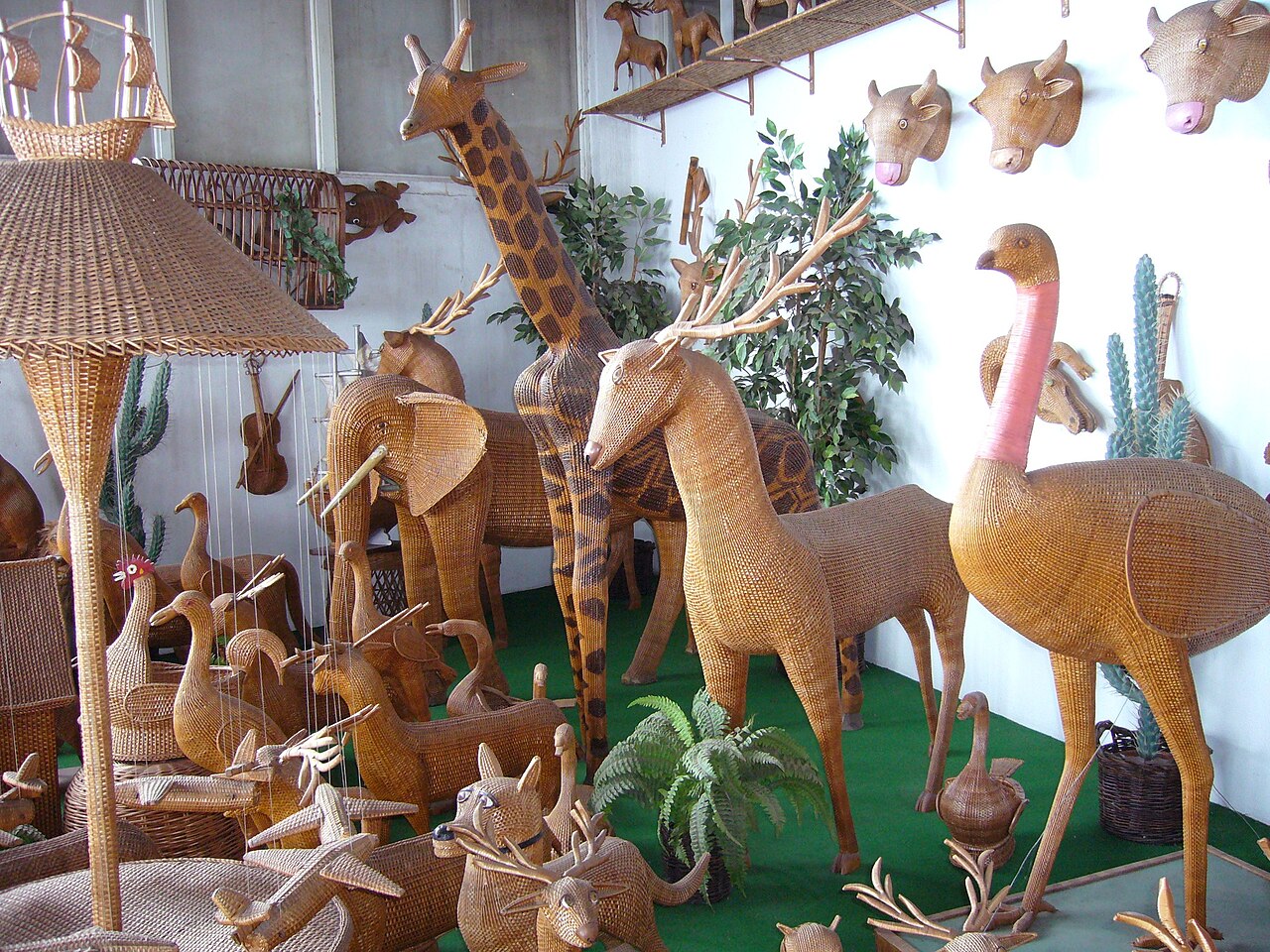

Camacha is Madeira’s proper wicker centre. A useful page keeps the practice here even when travellers reach it from Funchal.
The location is not decorative. Madeira’s official craft account traces the island’s wicker industry in Camacha to 1850 and connects the upland area’s water and growing conditions with the raw material. That gives a teacher something concrete to show: how a plant becomes a flexible working rod, and why preparation matters before the first weave begins.
At the bench, compare an unprepared rod with material ready for weaving, lay a small base and practise one repeatable sequence. The artisan watches spacing and tension, corrects your hands and lets you continue. You should leave able to recognise why one section holds its shape and another opens up. Preparing rods and completing a basket may require far more time than a visitor workshop allows, so a small sample or partly prepared form is an honest outcome.
When hands-on access is not public, a demonstration can still teach tools, stages and working rhythm if the maker explains decisions as the form grows. A shop display alone is retail. Ask who the artisan is, which stage participants attempt, how much of the object is prepared beforehand and whether the session is currently open to individual travellers.
Cooler upland weather and transport from Funchal belong in the plan. The working address should be Camacha, not merely the pickup point.
What we checked
Sources behind the local details
We used these sources for local history, geography and cultural context. Opening times, access and programmes can change, so confirm current details with the venue or host. Sources checked on 21 August 2026.