_(cropped).jpg)
Portugal rewards a learning trip built around one place and one practice. European Portuguese, regional cooking, pastry, ceramics, tile, textiles, surf, sailing and landscape interpretation all belong here, but not everywhere in the same way. Lisbon is not a substitute for Madeira; Porto does not teach the same kitchen as the Alentejo; and a famous wave does not automatically make a beach suitable for a first lesson.
A good starting question is simple: what do you want to be able to do after the first hour? You might repeat a corrected Portuguese exchange, control the texture of an egg-yolk sweet, paint a tile and understand what firing will change, trim a sail under instruction, or read a levada route with more confidence. Let that first-hour goal decide where you stay.
Choose a region by what it can genuinely teach
Lisbon has Portugal’s broadest short-stay mix: European Portuguese, cooking, pastry technique, tile interpretation and painting, urban photography and sailing on the Tagus. Its strength is choice, but addresses matter. Sintra, Cascais and Azeitão are separate places, even when an operator sells them as a Lisbon excursion.
Porto is a strong base for northern cooking, Portuguese study and azulejo. A workshop using a prepared commercial tile is a painting lesson, not a course in making ceramic tiles from clay. The city also works well for guided tile interpretation because façades, stations and churches let a learner compare tiles in architectural context.
Central Portugal becomes more specific. Coimbra suits structured Portuguese study and careful interpretation of Coimbra song; a performance remains a performance unless someone teaches the musical or lyrical form. Aveiro’s clearest pastry relationship is ovos moles, while the ria supports guided interpretation of a working lagoon. Peniche has deep surf supply and a real sailing tradition. Nazaré is compelling for ocean and wave photography. Beginner surfers should choose a school and beach through the day’s actual conditions rather than the town’s big-wave fame.
In the Alentejo, Évora is a useful base for regional cooking. São Pedro do Corval belongs on a pottery route because its working ceramic tradition is local, while Arraiolos belongs to needlework and tapestry. Cork is part of the regional landscape and economy; choose a factory or shop visit for interpretation and a workshop for practical making.
The Algarve divides again. Faro and Lagos are credible sailing bases; Sagres has a strong Atlantic setting for surf and coastal interpretation; Loulé can support regional craft research. Yoga may be well taught at a retreat, but it is not Portuguese merely because the mat is beside an Algarve pool.
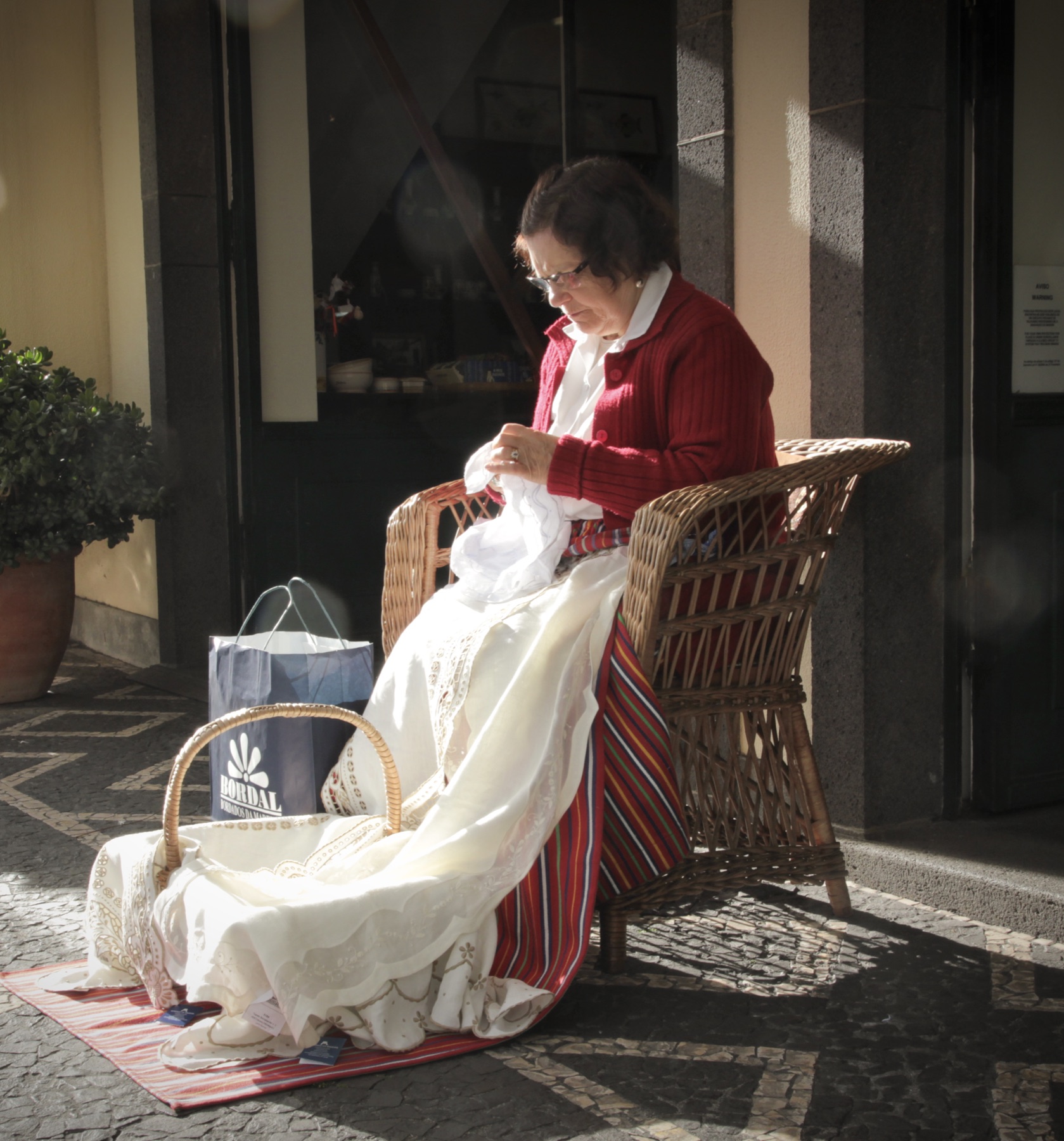
Madeira is strongest when the island itself shapes the lesson: levada and mountain walking, Funchal embroidery, Camacha wicker, Porto da Cruz surf, and field interpretation of laurel forest and cultivated terraces. The Azores need an island-by-island plan. Horta is naturally tied to sailing, Pico to volcanic walking, and the islands’ protected craft system can guide serious studio research.
Lessons, interpretation and visits are different promises
A lesson gives you a task, time to try it, and feedback that changes the next attempt. In a cooking class, that means preparing meaningful stages rather than watching a chef and eating. In surf, it means a level-matched drill, supervised attempts and correction. In language study, it means speaking, receiving specific correction and trying again.
Guided interpretation is also worthwhile when it is named honestly. Reading azulejo in a church, comparing Coimbra songs or understanding a lagoon can be active learning without pretending that you made, sang or managed what you observed. A demonstration lets you see a practitioner work and ask informed questions. A passive visit may still be enjoyable; it simply should not be sold as a class.
Use the first 60–90 minutes as a reality check. Can you picture your own role? Look for what the teacher introduces, what you handle or attempt, when feedback arrives and what you can try again afterwards. If the answer is still “enjoy the atmosphere”, you are probably looking at a visit rather than a lesson.
Regional food means more than a national menu
Portuguese cooking changes with coast, interior, island, season and household. A Lisbon class may work with market fish, rice, soups or pastry; Porto should earn its northern label through the dish and technique; the Alentejo brings bread, herbs, soups and slow-cooked traditions into a different kitchen; Madeira and the Azores have their own ingredients and methods.
Bacalhau is a national thread rather than a single regional dish. A useful class teaches desalting, texture, temperature or a repeatable preparation—not simply that cod has many recipes. Pastry needs the same precision. Pastel de nata technique belongs naturally in Lisbon, while ovos moles has an exact Aveiro connection.
Plan around conditions, not postcard seasons
Spring and autumn often make city walks, outdoor photography and mixed itineraries comfortable. Summer brings heat and crowds on the mainland; winter can still work well for language, cooking and studio craft. Surf and sailing depend on the exact coast, wind, swell, tide, ability and school decision, not on a generic promise of sunshine.
On Madeira and the Azores, weather can differ sharply over short distances. Walking plans need an official route-status check close to the day, proper footwear and a realistic fallback. An island transfer can consume more of a short trip than the map suggests.
Build a trip with enough time to learn
For a long weekend, choose one base and one primary skill. A week can support a short course plus one companion practice, such as Portuguese and cooking in Lisbon, or surf and coastal photography around Peniche. A two-week trip can combine regions if travel days are protected rather than squeezed between lessons.
Start with the place pages below, then follow the exact skill that interests you:
- Lisbon for Portuguese, pastry, azulejo, photography and sailing
- Porto for northern cooking, Portuguese and tile
- Coimbra for language study and song interpretation
- Aveiro for ovos moles and lagoon interpretation
- Ericeira and Peniche for surf coaching with different trip rhythms
- Évora for an Alentejo food base
- The Algarve for sailing, coast and carefully matched surf
- Madeira for walking, embroidery, wicker and island field learning
Portugal’s planning guides are ready to use, even where no class is listed yet. Choose the place and practice that feel right, then bring us your dates. We can check who is currently teaching, what you would actually do and whether the journey still makes sense before you commit.
What we checked
Sources behind the local details
We used these sources for local history, geography and cultural context. Opening times, access and programmes can change, so confirm current details with the venue or host. Sources checked on 21 August 2026.