_(cropped).jpg)
Portugal becomes much easier to plan when you stop asking “Which cities should I see?” and ask a more enjoyable question: what would I love to learn while I am there?
Perhaps you want to feel pastry dough change under your hands, hear the rhythm of European Portuguese more clearly, paint an azulejo, take the helm or learn why a levada runs where it does. Begin there. The right place—and the amount of travel worth doing—usually follows.
This guide helps you choose a practice with a real Portuguese connection, recognise a genuine lesson and build enough room around it to enjoy the day.
Find the Portuguese place inside the lesson
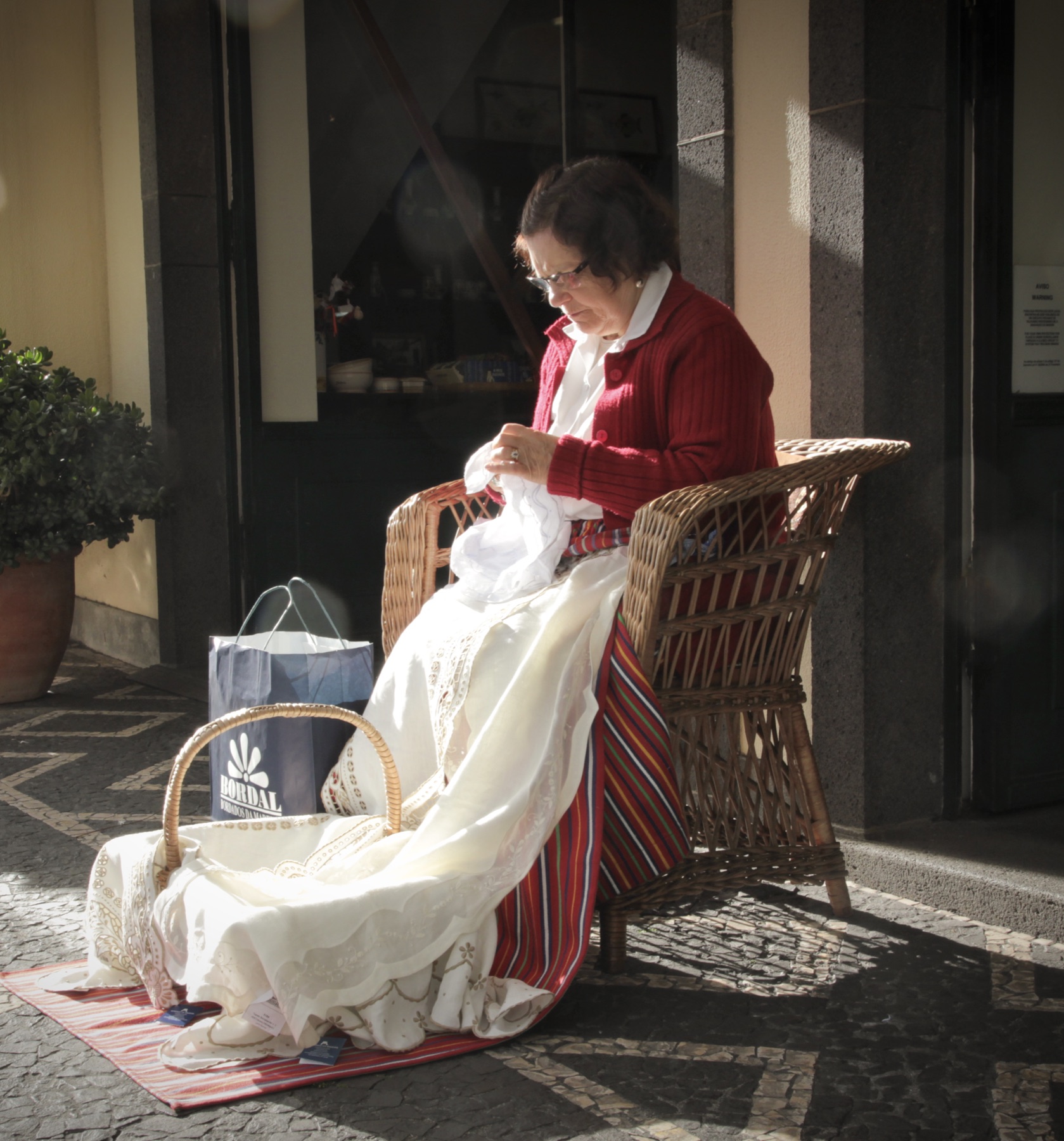
A skill belongs on the map when the place changes what you learn. In Aveiro, that may be the protected identity and precise texture of Ovos Moles de Aveiro. In Arraiolos, it is a particular needlework tradition, not generic loom weaving. Around Gondomar, filigree carries a living network of goldsmiths and enchedeiras. On Madeira, water channels, steep terrain, embroidery and wicker lead you to different parts of the island.
That does not mean every useful lesson must be ancient or unique. European Portuguese can be studied in Lisbon, Porto, Coimbra or Faro because real teaching exists and the city gives you somewhere to use it. Sailing makes sense on the Tagus, in Algarve harbours and around Horta when you take an active crew role. Surf belongs in Ericeira, Peniche and Porto da Cruz for different reasons, but the coach must still choose the day’s water for your level.
If the destination could be swapped without changing the method, material, conditions or cultural understanding, treat it as a convenient venue rather than a defining place–skill relationship.
Know which experience you are choosing
Portugal offers excellent lessons, demonstrations, interpreted visits and scenic trips. They are not interchangeable.
- In a lesson, you practise, receive feedback and try again.
- In a demonstration, the practitioner works while you watch and ask questions.
- In guided interpretation, you observe a place or object closely and use evidence to understand it.
- On a passive visit, the value may be atmosphere, access or enjoyment rather than a new skill.
None of these formats is automatically better. The problem begins when a tasting is sold as a cooking class, a sunset cruise as sailing tuition or a ten-minute tile decoration as the whole story of ceramics.
Use the first hour test. What will you handle, say, decide or notice? When will somebody respond to your first attempt? What can you repeat by the end? If you cannot picture that, ask before you book.
Let regional differences improve the trip
Portuguese cooking is not one national menu. Lisbon pastry, northern cooking around Porto, Alentejo bread-and-herb traditions and island kitchens deserve their own ingredients and explanations. Bacalhau is a national thread, but a useful class still needs a declared recipe and technique.
Clay and tile need the same care. Painting an azulejo in Lisbon or Porto is different from forming clay around Caldas da Rainha or São Pedro do Corval. Read the azulejo guide and ask what the kiln changes, who fires the piece and when you can collect it.
For northern metalwork, use the filigree guide to understand frames, fine wire, filling and safe beginner stages. For the Alentejo landscape, the cork guide separates a woodland walk, harvest demonstration, factory visit and bench craft. Each can be worthwhile; each teaches a different part of the material’s journey.
Music asks for attentive language too. A performance lets you listen. Guided interpretation teaches you what to hear. Participatory tuition gives you a voice or instrument, correction and time to repeat. Start with the fado guide, then follow Coimbra’s own song tradition through the city rather than treating every Portuguese performance as the same form.
Build a week that leaves room to learn
For three or four days, choose one base and one main practice. Lisbon can combine language with cooking, pastry, tile, photography or sailing without a change of hotel. Porto works well for northern cooking, Portuguese and azulejo. Coimbra pairs structured language study with guided listening.
With a week, add one companion practice or a second base that truly changes the learning. Aveiro can follow Porto for ovos moles and lagoon interpretation. Arraiolos or Évora can deepen an Alentejo route. On Madeira, staying nearer Porto da Cruz or a walking area may serve you better than returning to Funchal after every session.
Protect travel time. Portugal may look compact on a map, but city hills, island roads, marina meeting points and transfers to the day’s surf beach all use real hours. One good lesson and an unhurried meal often make a better day than three bookings joined by anxious driving.
Check the details that can change
Before committing, confirm the teacher, exact venue, active learning time, group size, language, materials, access, cancellation terms and what happens when weather changes. For sailing, the Portuguese Sailing Federation publishes its current certified-school list; if a course promises a qualification, ask which syllabus and issuing body apply. For Madeira walks, check official route status close to the day. For sea activities, the exact beach or launch point matters more than the town in the page title.
It is better to name no class than to send you towards one we cannot describe honestly. When a current lesson is not listed, this guide still helps you understand the practice and ask better questions. Send us your dates and the thing you hope to bring home; we can check who is teaching before you decide.
What we checked
Sources behind the local details
We used these sources for local history, geography and cultural context. Opening times, access and programmes can change, so confirm current details with the venue or host. Sources checked on 21 August 2026.