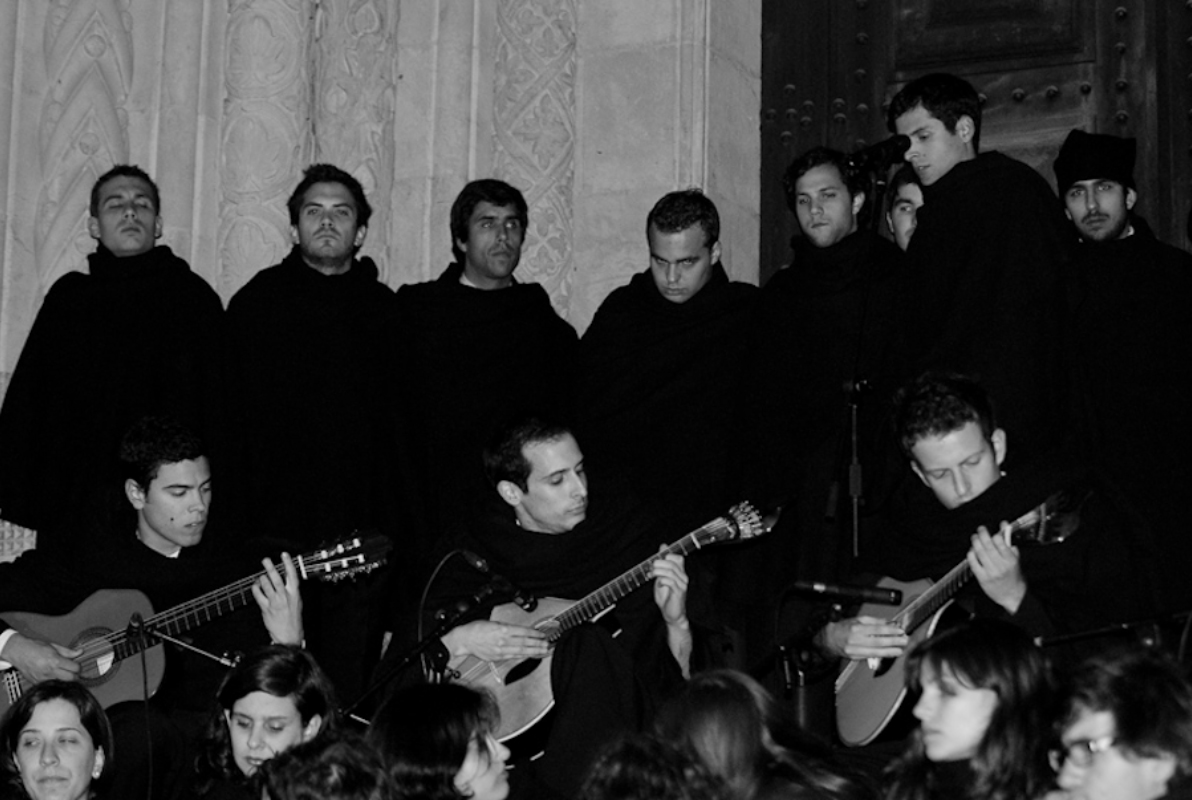

Fado is a Portuguese musical tradition with distinct histories and settings, especially in Lisbon and Coimbra. A performance can teach through attentive listening, but it is not automatically a singing or guitar lesson.
UNESCO inscribed Lisbon’s urban popular fado on its Representative List of the Intangible Cultural Heritage of Humanity in 2011. Its account describes a meeting of music and poetry shaped by Lisbon’s communities and several musical currents. That history is richer than reducing every song to one emotion or translating saudade as a complete explanation.
Lisbon and Coimbra need separate explanations
Lisbon fado is tied to particular urban histories, performers and venues. A solo singer is traditionally accompanied by the wire-strung viola and the pear-shaped Portuguese guitar, though ensembles vary. Coimbra song has its own university associations, performance customs and musical character. Calling both simply “a fado show” erases useful differences.
In Lisbon, the Museu do Fado is the clearest starting point for history, instruments and named performers. It also offers education around Portuguese guitar. In Coimbra, ask for an interpreter who can explain the city’s academic setting and listening customs without pretending that every performance follows one fixed script.
A guided listening session can introduce voice, lyric, Portuguese guitar, accompaniment and setting, compare two examples, then ask you to hear the next one with those clues. That is interpretation.
Participatory tuition requires more: a named musician, starting level, time to practise, correction and another attempt. A short talk before dinner remains hospitality and context unless those teaching stages occur.
What to listen for
Begin with the relationship between singer and accompaniment. Notice when the guitar answers the voice, prepares an entry or changes the room’s tension. Listen for the shape of a stanza and for repeated lines before trying to follow every word.
Next, ask what kind of text you are hearing and who made it. A useful guide names the poet, composer or performer where known and explains enough Portuguese vocabulary to help you recognise a repeated image. This is more valuable than assigning one generic story to the whole tradition.
Finally, notice the room. A concert hall, museum programme, academic setting and small fado house create different relationships between performer and listener. Silence during a song may be part of respectful attention, while conversation belongs between pieces.
Choose the right learning format
For a first evening, combine a short daytime introduction with a performance. For deeper listening, book a guide who compares recordings and gives you two or three features to identify live. For singing or guitar, look for a daytime lesson with an instrument, an appropriate starting piece and enough quiet time to repeat a phrase after correction.
Sixty minutes can support guided listening or a focused beginner exercise. It cannot make a novice fluent in Portuguese guitar technique or in the social history of both Lisbon and Coimbra.
During a performance, follow the room’s etiquette and keep questions for an appropriate moment. Learn to listen first; book a separate daytime class if you want to sing or play.
Ask who guides the listening, compare two recordings before the performance and note one feature you can recognise again. For a lesson, confirm the instrument, teacher and practice time.
What we checked
Sources behind the local details
We used these sources for local history, geography and cultural context. Opening times, access and programmes can change, so confirm current details with the venue or host. Sources checked on 20 August 2026.