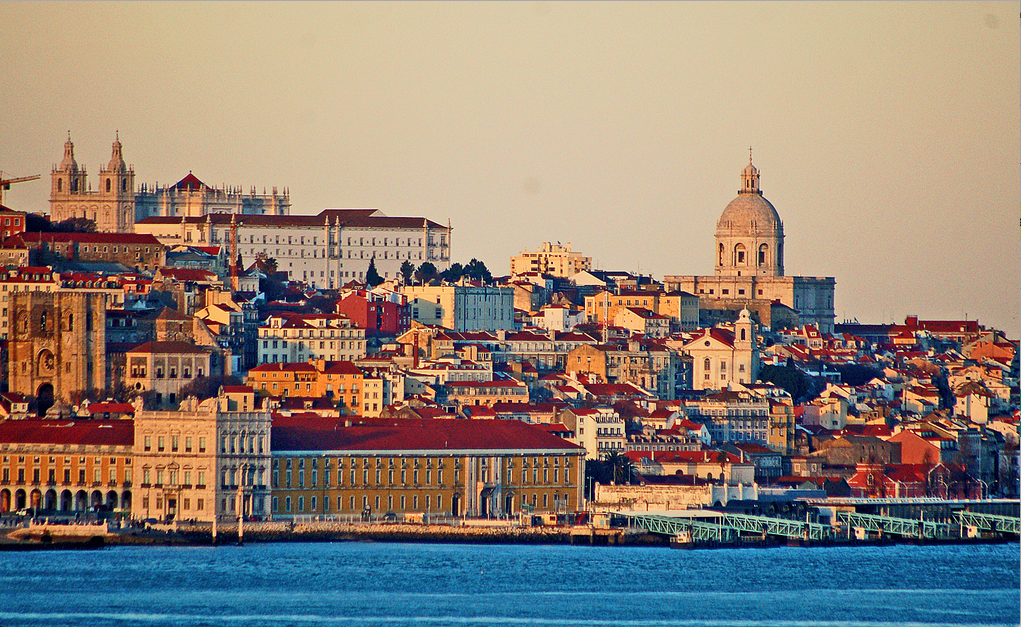

Lisbon can hold a full learning week without sending you racing across Portugal. You might begin the morning shaping pastry dough, spend an afternoon listening for European Portuguese and finish another day at the helm on the Tagus. The pleasure comes from doing less, more attentively—and knowing where each lesson ends and a tour begins.
What Lisbon teaches particularly well
For Portuguese, you have formal schools and immediate daily practice around you. Choose a short course that puts you into level-matched exchanges, corrects the sounds you are struggling with and lets you try again. “Immersion” should not mean leaving you alone to decode every conversation. Ask whether the advertised hours are taught hours and whether outings sit inside that total.
Lisbon’s tile story works at two levels. At the National Tile Museum and across the city, guided interpretation can teach you to notice period, placement, pattern and architectural use. In a painting workshop, you should draw or transfer a design, apply colour, receive technique feedback and understand the firing or collection arrangements. Painting a prepared tile is not the same as forming and firing a tile body.
Cooking and pastry need similarly clear roles. A genuine class has you prepare meaningful stages, taste at useful checkpoints and correct texture or seasoning. A pastel de nata session should expose enough of the dough, custard, heat and finishing method for you to understand why the result behaves as it does.
Photography and sailing need active practice
Take a camera into Lisbon and the hills, tiled surfaces, river edges and changing light give you plenty to work with. A taught walk includes a first frame, feedback on light or composition, and a second attempt. A guide who only leads you to viewpoints is offering a photo walk, not photography tuition.
On the Tagus, a sailing lesson gives you an active crew role and a declared manoeuvre under correction. A sunset cruise can be lovely, but it is not a sailing course because a guest briefly touches the wheel.
Keep the geography honest
Sintra, Cascais and Azeitão are not Lisbon city. They can make sensible day trips, but the travel time and exact venue belong in the description. Within Lisbon, hills and cobbles can also make two nearby points slower to connect than they look; one neighbourhood or one river sector per session is usually enough.
Indoor language, cooking and studio work make Lisbon viable year-round. Spring and autumn are comfortable for location work; summer calls for early outdoor sessions and heat-aware routes. Ask about step-free access directly, because older studios and steep streets vary greatly.
Continue with Portuguese courses, Lisbon cooking classes, azulejo or Lisbon photography workshops.
What we checked
Sources behind the local details
We used these sources for local history, geography and cultural context. Opening times, access and programmes can change, so confirm current details with the venue or host. Sources checked on 21 August 2026.