_(cropped).jpg)
Funchal is the right city for an introduction to Madeira embroidery because design, hand stitching, finishing and certified production can be explained in their local system.
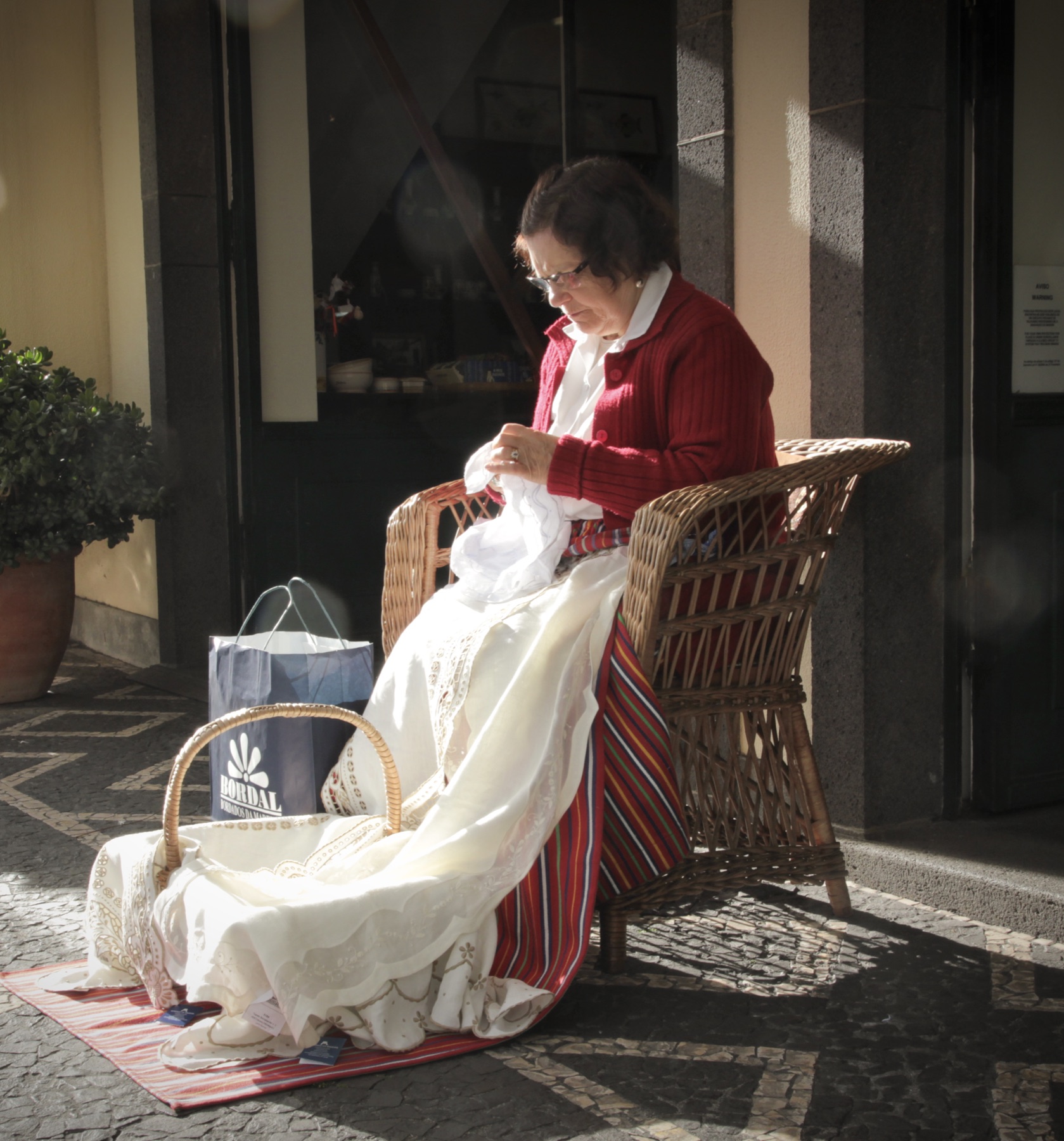
Look closely at the material as well as the motif. Madeira embroidery is worked by hand on grounds including linen, cotton, natural silk and organdie, and the stitch changes how an edge, opening or filled area behaves. Names such as caseado, Richelieu, ponto de corda and garanito are useful only when the embroiderer shows you what the thread is doing and lets you try one at a manageable scale.
In a genuine workshop, the embroiderer gives you fabric and thread, demonstrates a manageable stitch or motif, watches your hand position and tension, and corrects the first attempt. You repeat it before moving on. A small sample is a better promise than a finished commercial piece.
Current workshop formats in Funchal can take you through design, perforating the pattern, transferring it to fabric and embroidery, with a small kit for the practical stage. Ask which stages you will only see, how much of the 90-minute session is spent stitching, and whether an experienced embroiderer stays beside the group throughout.
Madeira’s guarantee seal belongs to certified finished work that meets the regional system; completing a visitor workshop does not certify your sample. A thoughtful teacher will explain that distinction and show why a large commercial piece can take months, while helping you make one small section well.
A factory visit or demonstration can still be valuable. Choose the workshop when you want protected practice, an embroiderer beside you and feedback on your own stitches.
What we checked
Sources behind the local details
We used these sources for local history, geography and cultural context. Opening times, access and programmes can change, so confirm current details with the venue or host. Sources checked on 21 August 2026.