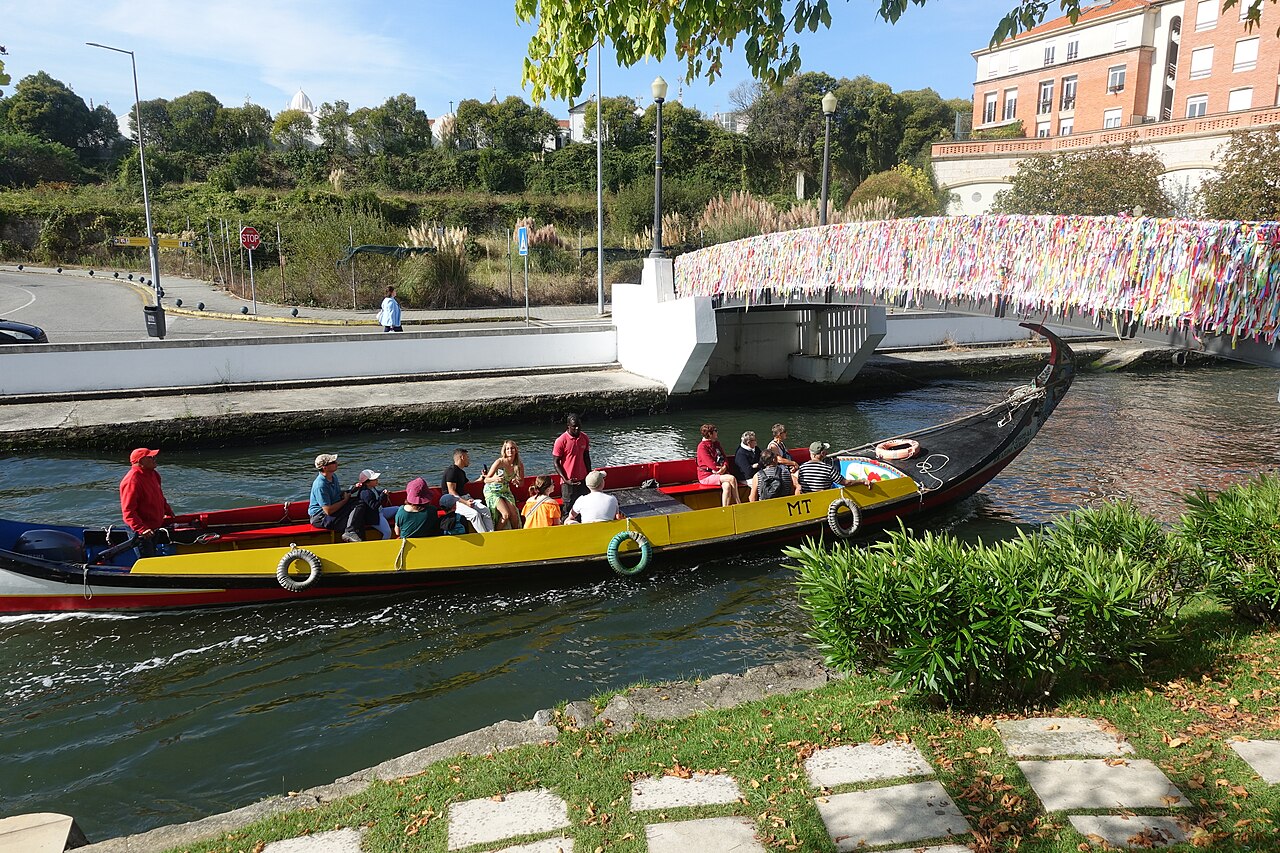

The Ria de Aveiro is a changing lagoon and working landscape. It becomes a field lesson when a guide helps you notice relationships rather than simply points out sights.
Begin with its shape. The shallow ria extends through four principal arms towards Ovar, Murtosa, Vagos and Mira, while a single opening connects it to the sea. Tide exposes mud and silt in one place, shifts water through a channel in another and changes where birds can feed around salt pans and marsh. A guide who puts that map in your hands before the boat moves gives you clues you can keep testing.
A useful session might ask you to compare two arms or the same edge at different states of tide, identify signs of salinity, and connect habitat with fishing, salt or settlement. Exposed sediment may hold molluscs and crustaceans even when it looks empty from a distance. The guide introduces a clue, you observe it, discuss it and apply it again later. That small cycle distinguishes interpretation from commentary delivered over a boat engine.
A moliceiro ride can be enjoyable and culturally interesting, but it is not automatically lagoon education. Ask who leads, where you will stop to observe and what you will be invited to notice for yourself.
Tide, weather and bird sensitivity affect the route. Ask which tide the session is planned around and whether observations happen from shore, boat or both. Bring binoculars only if they support the task, follow protected-area guidance and accept that wildlife is never guaranteed. An indoor map or object session makes a better fallback than pretending the conditions do not matter.
What we checked
Sources behind the local details
We used these sources for local history, geography and cultural context. Opening times, access and programmes can change, so confirm current details with the venue or host. Sources checked on 21 August 2026.