.jpg)
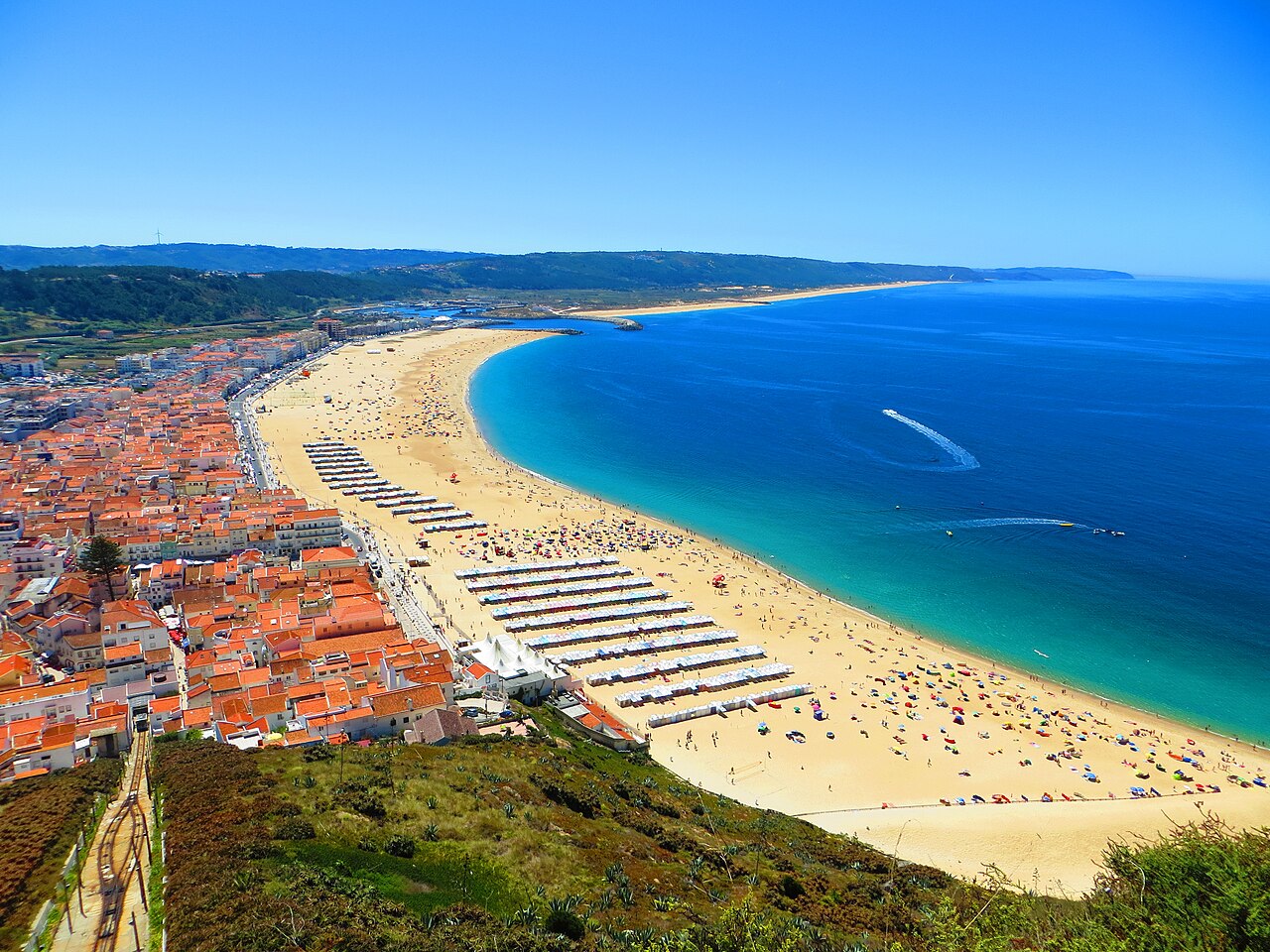
Nazaré gives ocean photography unusual scale, but a useful workshop does not depend on giant waves appearing.
The teacher should set an assignment—movement, scale, weather or the relation between town and sea—then review an initial frame. Advice on shutter speed, lens, viewpoint or foreground should shape a second attempt. Transport to a lookout without critique is a location tour.
Two settings can give the day a useful rhythm. From Sítio, you can work on scale and the relationship between coastline, sea and town. Lower down, the beach and harbour offer closer details, working boats and people against the water. A tutor should choose the order for the light, wind and safe access instead of racing between viewpoints.
Big-wave conditions are seasonal and never guaranteed. Strong wind, spray and crowded viewpoints can limit equipment and safe positions. The tutor should work with the sea that is present and have a harbour or town assignment for calmer days.
Ask whether image review happens in the field or afterwards, what equipment is suitable and how walking surfaces affect the route. The IPMA maritime forecast is useful close to the day, while local closures and the tutor’s decision should shape the final route. No photograph is worth crossing a barrier or standing where spray and swell can reach unexpectedly.
What we checked
Sources behind the local details
We used these sources for local history, geography and cultural context. Opening times, access and programmes can change, so confirm current details with the venue or host. Sources checked on 21 August 2026.