_edited.jpg)
Choose a Spanish course in Spain by the practice you need, not by a promise of effortless immersion. Salamanca suits a compact, study-led stay. Barcelona adds a visibly multilingual setting. Seville, Málaga and Valencia pair structured study with different rhythms, climates and local language contexts.
Choose the city before the school
| Place | A useful reason to study there | The question that changes the choice |
|---|---|---|
| Barcelona | Spanish practice alongside Catalan public life | How does the course explain the multilingual setting? |
| Málaga | Southern Spanish listening in a Mediterranean city | Does listening practice treat local speech respectfully? |
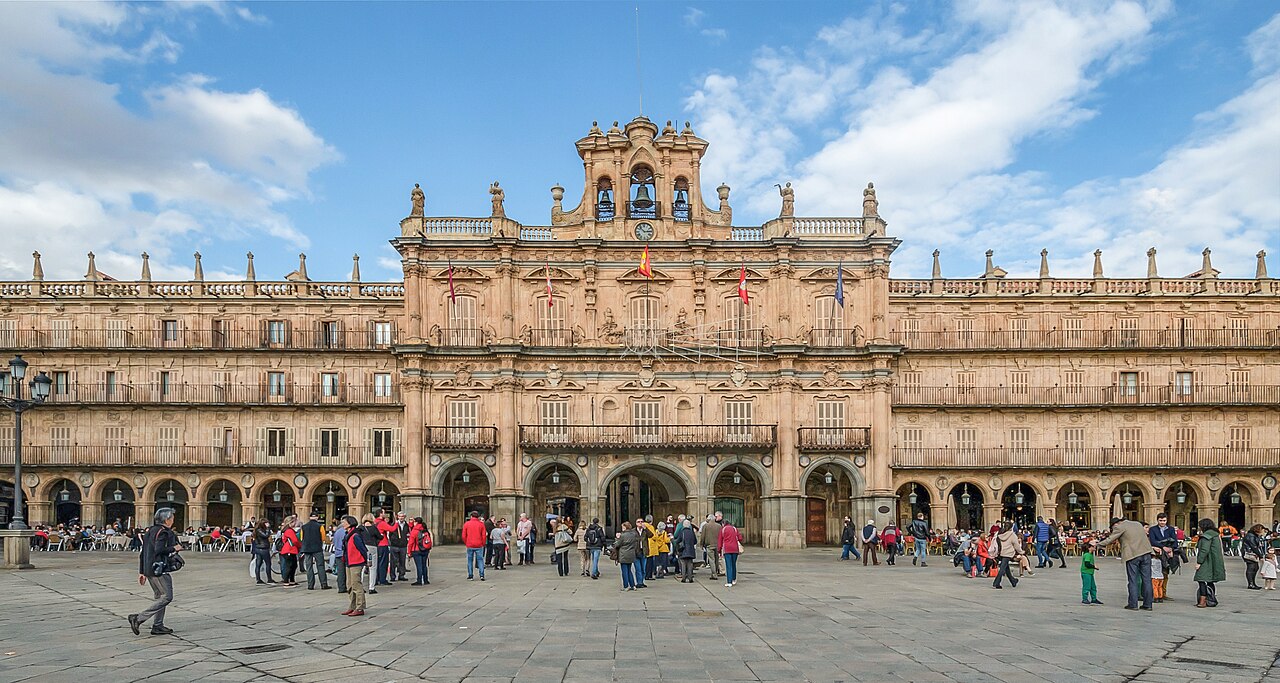
| Salamanca | A compact university city with a long language-teaching history | How many minutes are taught, and how is progress reviewed? |
| Seville | Structured Spanish with possible flamenco study alongside it | Are the language and flamenco components separately taught, timed and corrected? |
| Valencia | Spanish study in a city where Valencian is also visible | Does the course explain when you may encounter each language? |
No city supplies automatic conversation. Your timetable, group size and willingness to speak matter more than the word “immersion.”
A homestay can add contact, but it does not guarantee patient correction or daily conversation.
Picture the first 90 minutes
A useful opening class begins with a short level and goal check. You then hear or read a small piece of Spanish, notice one workable pattern and use it in a conversation task. The teacher listens, corrects something specific and gives you another attempt. By the end, you should know what to practise next rather than simply having completed a worksheet.
Ask for this sequence in concrete terms. How many learners will speak? Will the teacher correct pronunciation, grammar or both? Does the class include a prompt you can reuse outside, such as asking for directions, arranging a meeting or explaining a preference?
Compare hours honestly
“Twenty lessons” and “twenty hours” are not necessarily the same. Check lesson length, breaks, public holidays and whether cultural activities count as tuition. Placement identifies a suitable starting group; it is not proof that you will finish at a particular CEFR level.
Accreditation can tell you that a centre has passed an external review, but check the current authority directory rather than relying on a logo. You still need the named course, teacher, timetable, actual group cap, access details and cancellation terms for your dates.
Add another skill carefully
Spanish plus flamenco, cooking or walking can make a strong learning trip when both halves stand on their own. Ask how many hours belong to Spanish, what you practise in the second activity and who teaches each part. Performances, meals and guided outings work best as supporting context around the taught practice.
Explore how Spanish varies across Spain. Then tell us your level, dates and preferred city. Include the situation in which you most want to speak confidently.
What we checked
Sources behind the local details
We used these sources for local history, geography and cultural context. Opening times, access and programmes can change, so confirm current details with the venue or host. Sources checked on 22 August 2026.