.jpg)
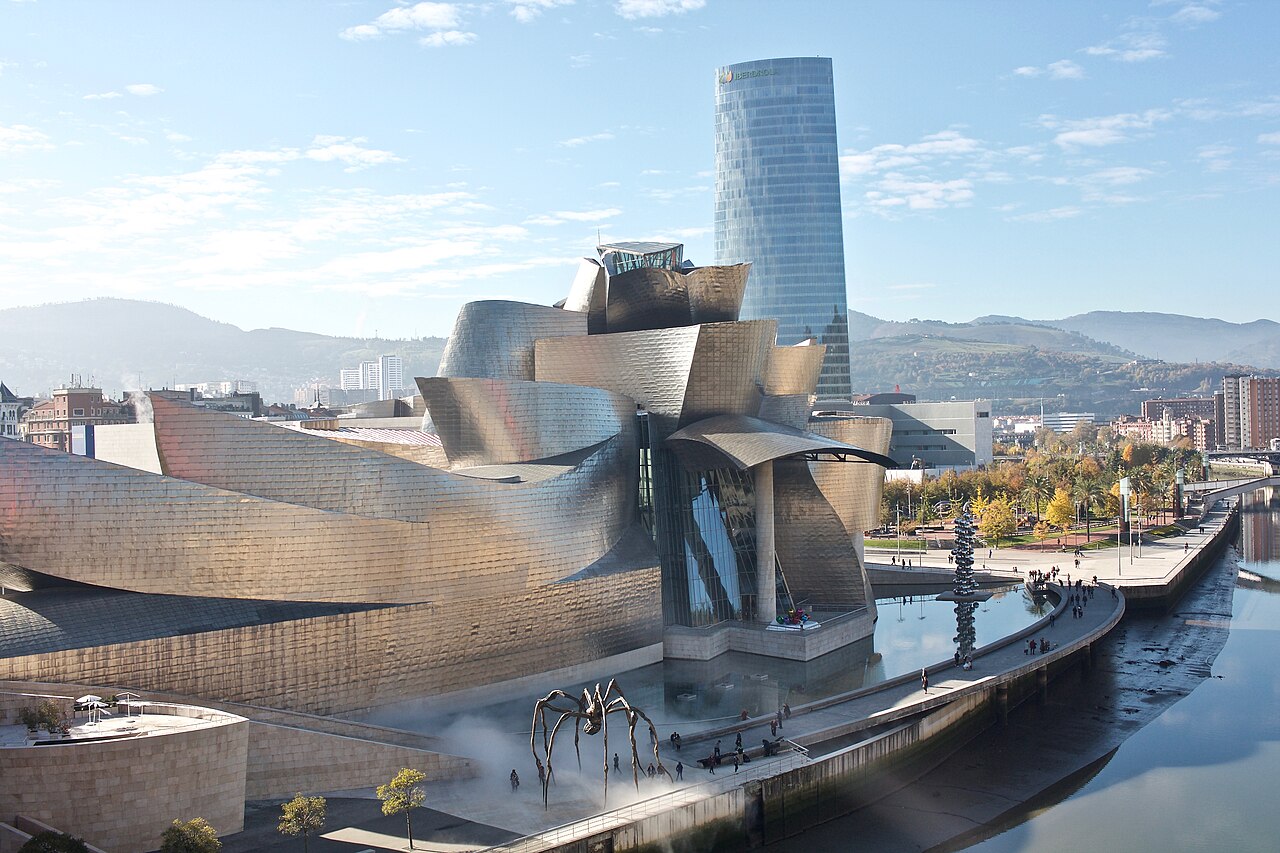
Bilbao is best approached as a city you learn to read. Follow the river, industrial traces, transport, public space and cultural buildings, then ask how change happened and who experienced it. This is stronger than treating one titanium-clad museum as a complete explanation.
Read urban change through evidence
Begin with the old industrial river corridor and compare it with Abandoibarra, the Guggenheim Museum, tram and public realm. Look for what existed before each intervention, who designed and funded it, how people use it now and which outcomes cannot be credited to one building.
An architect or urban specialist can help you compare sources and carry the same questions to Azkuna Zentroa or the metro. Guided interpretation — not a class is the right promise. A self-guided architectural walk can also be useful when it gives you a clear sequence and avoids inflated claims.
Make museum time active
The Guggenheim publishes learning programmes, while Bilbao Fine Arts Museum, Itsasmuseum and other institutions offer different routes into art, industry and maritime history. Check the current programme and audience. Admission, an audio guide and an educator-led activity are different experiences.
Choose one question for a visit: how material changes a building, how the river shaped work, or how a former industrial structure has been reused. Two well-compared sites will teach you more than a long list of entrances.
Place language inside the city
Spanish and Euskara are both part of Bilbao’s learning landscape. Formal study needs public eligibility, level, taught hours and corrected practice. Seeing bilingual signs gives context; it does not turn an ordinary visit into language tuition.
Bilbao’s weather makes indoor–outdoor flexibility useful. Rain can enrich the river story without making a long exposed route comfortable. Keep Getxo, Portugalete and the Bizkaia Bridge as nearby routes: they sit outside Bilbao municipality and need their own travel and access details.
No dedicated Bilbao lesson page is ready yet. This place guide remains useful because it gives you a serious method for choosing an expert route, a museum programme or future language course without inventing a class.
What we checked
Sources behind the local details
We used these sources for local history, geography and cultural context. Opening times, access and programmes can change, so confirm current details with the venue or host. Sources checked on 22 August 2026.