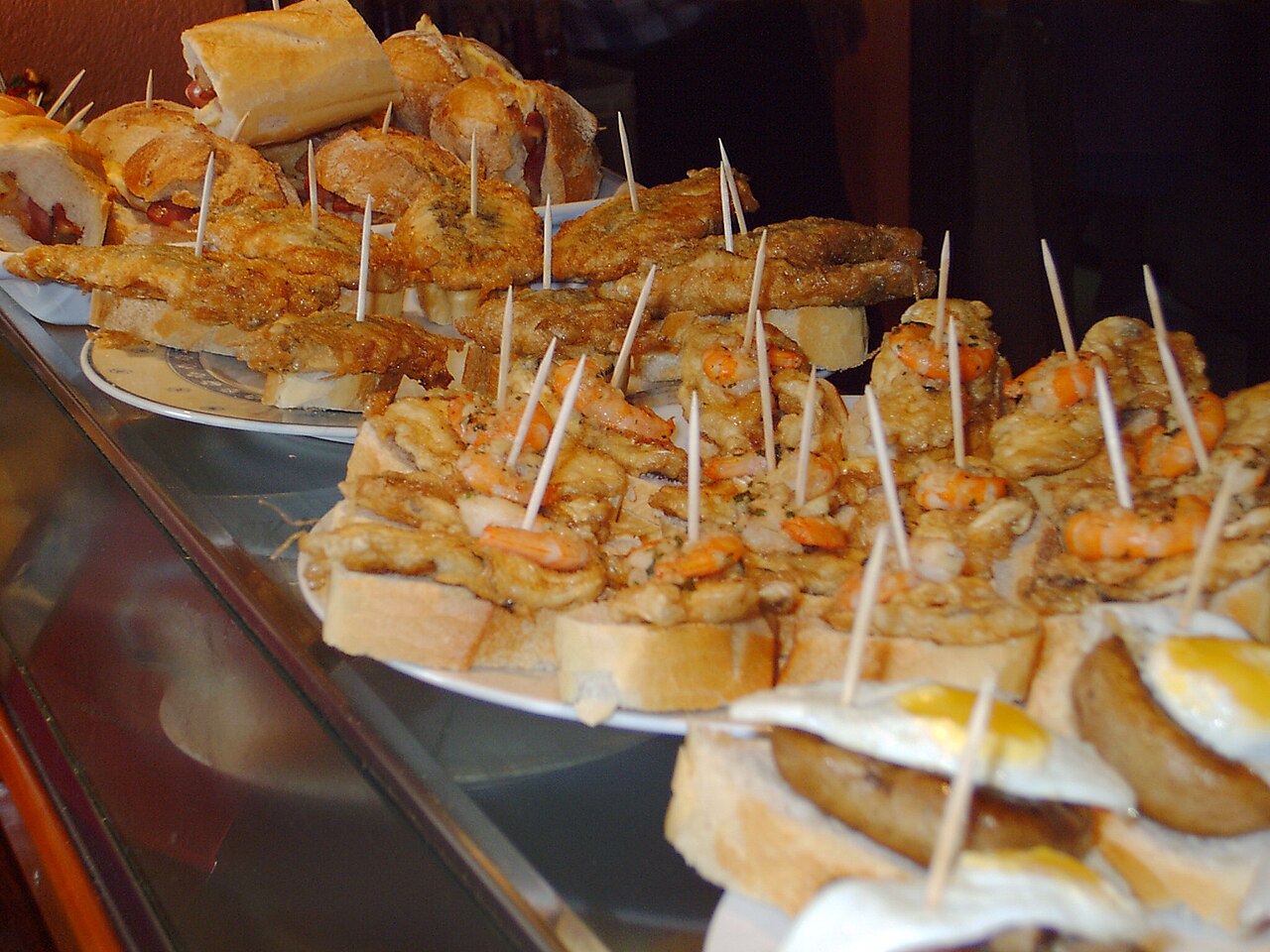

A pintxo is not defined by a toothpick, a slice of bread or one universal rule. In the Basque Country it is a flexible small-food form and part of a social way of moving through bars. Some sit on bread. Some are held together with a skewer. Others arrive hot from the kitchen. What matters for a learning trip is the experience you choose around them.
Begin at the counter
Look before you order. Cold pintxos may be displayed; hot ones may appear on a board or be prepared to order. Prices, ordering and payment customs vary by venue, so ask rather than assuming that every bar follows the same ritual.
The classic Gilda brings anchovy, olive and chilli pepper together in a compact banderilla. It is a useful first study because balance depends on salt, acidity, heat and texture. It also shows why “pintxos are tapas on bread” is too blunt to help.
Words such as poteo and txikiteo describe a social route through several venues. They do not mean a cooking class. You can take part without drinking alcohol; ask for an alcohol-free drink and concentrate on the food, ordering language and movement between bars.
Choose the kind of learning you want
A self-guided bar evening gives you atmosphere and comparison. A knowledgeable food guide can explain neighbourhood patterns, ingredients, ordering and change over time. Guided interpretation — not a class is the accurate promise.
In a cooking lesson, you should prepare meaningful stages yourself. A beginner session might balance a Gilda, make one hot pintxo, practise safe knife work and adjust seasoning after tasting. The teacher should explain why a component changed, then give you another attempt.
Ask these questions before choosing:
- Which pintxos will we make, and which will we only taste?
- How many people share each workstation?
- Who teaches, and how much preparation will I do myself?
- How are allergies and cross-contact handled?
- Can the full session be delivered without alcohol?
- Will I receive recipes or ratios I can repeat at home?
Donostia and Bilbao are not one route
San Sebastián has a dense pintxo culture across areas such as the Parte Vieja, Gros and Antiguo. Bilbao offers its own neighbourhood routes and Biscay context. Neither city is the single “authentic” version of the Basque Country.
For a short stay, choose one neighbourhood and compare a small number of bites slowly. For practical learning, give the kitchen its own half-day rather than squeezing it between bars. Continue with the San Sebastián cooking guide, or compare the wider Basque Country learning map.
The useful souvenir is not a ranking of bars. It is a better way to notice form, ingredient, temperature and social context—and, if you cook, one small preparation you can make again.
What we checked
Sources behind the local details
We used these sources for local history, geography and cultural context. Opening times, access and programmes can change, so confirm current details with the venue or host. Sources checked on 22 August 2026.