
“Spanish cooking” is a useful starting label and a poor final menu. Coasts, dry plateaux, irrigated rice fields, mountain pasture, island agriculture and market cities produce different ingredients and habits. The best class names its regional relationship, then gives you a technique you can repeat.
Let the method locate the kitchen
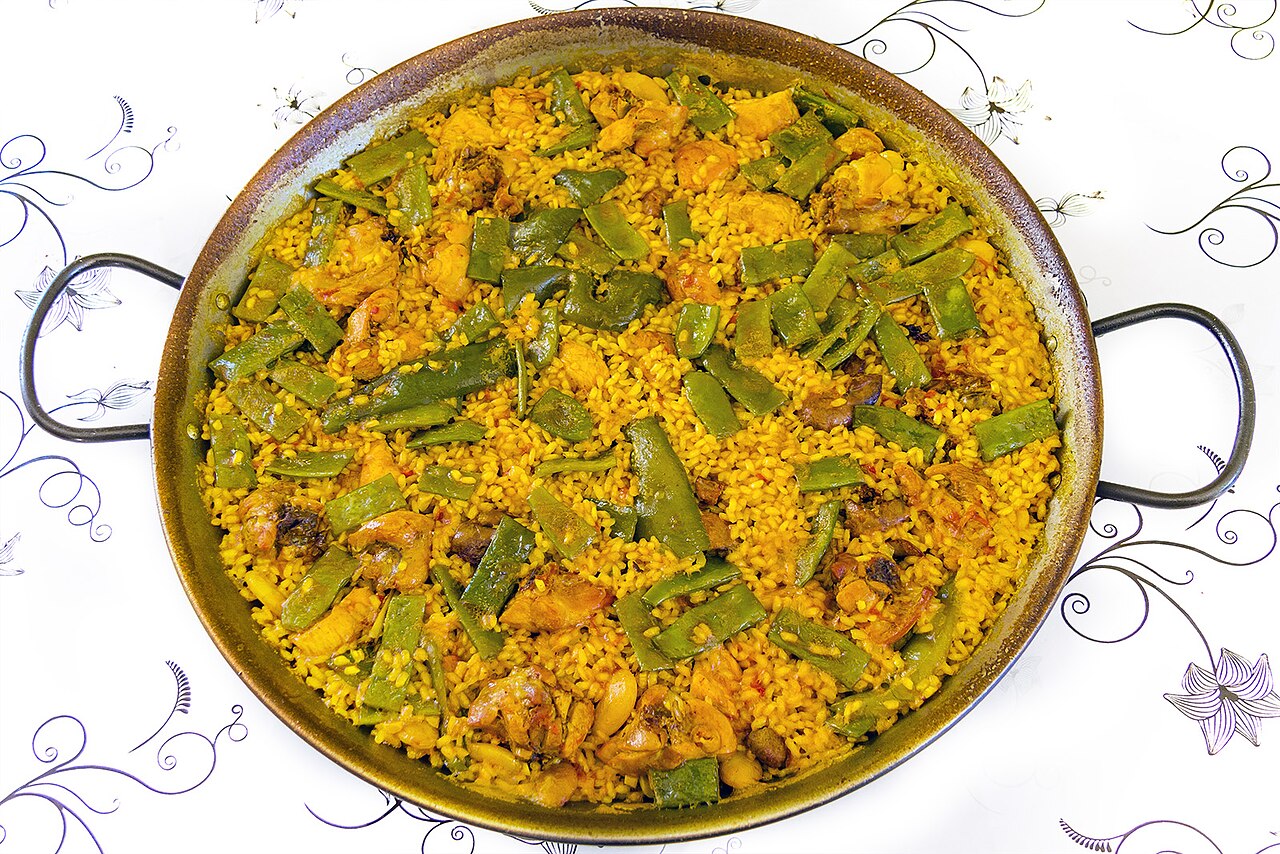
Around Valencia, rice is not simply a national symbol. A useful lesson explains the pan, heat source, stock, rice variety, ingredient timing and the point at which stirring stops. It should distinguish a declared preparation from a tourist catch-all called “paella”. A visit to the Albufera can add rice-landscape interpretation, but it is separate from active cooking.
In the Basque Country, pintxos create a different learning scale. You might balance anchovy, olive and chilli in a Gilda, prepare a hot bite or compare how a bar and a cooking school organise the same ingredients. A guided pintxo route teaches context; a class gives you a workstation, preparation and feedback.
Andalusian kitchens change between Atlantic and Mediterranean coasts, inland olive landscapes and city traditions. Seville is a practical base, not proof that every advertised menu is Sevillian. Ask which ingredient, dish or household technique makes the class belong there.
Madrid’s cooking reflects both its own repertoire and its role as a capital supplied by many regions. That breadth can make an excellent market-and-kitchen lesson when the teacher explains what is local, what travelled and which technique you will practise.
What protected names tell you
PDO and PGI records tell you where a product comes from and which production rules protect its name. A protected ingredient can give the lesson useful context. Good teaching still depends on what you prepare, taste, adjust and understand.
Ask the host to name:
- the dishes and techniques, not merely “Spanish favourites”;
- the stages each learner completes;
- how many people share a knife, hob or pan;
- substitutions and allergen controls;
- whether market time replaces or supports kitchen time;
- the recipe, ratio or method you can take home.
Match the format to your appetite
A tasting helps you compare. A market walk can explain season, supply and neighbourhood. A demonstration lets you watch skilled hands. A cooking lesson gives you meaningful preparation and feedback. A hosted meal offers conversation and hospitality. None needs to borrow the promise of another.
For a weekend, choose one city and one kitchen. With a week, compare two regions only when the second changes the ingredient or method enough to justify the journey. Start with the Spain cooking guide, then follow the route to San Sebastián, Seville or Madrid.
You do not need to master a national cuisine. One well-taught pan, sauce, dough or knife sequence is a far better beginning.
What we checked
Sources behind the local details
We used these sources for local history, geography and cultural context. Opening times, access and programmes can change, so confirm current details with the venue or host. Sources checked on 22 August 2026.