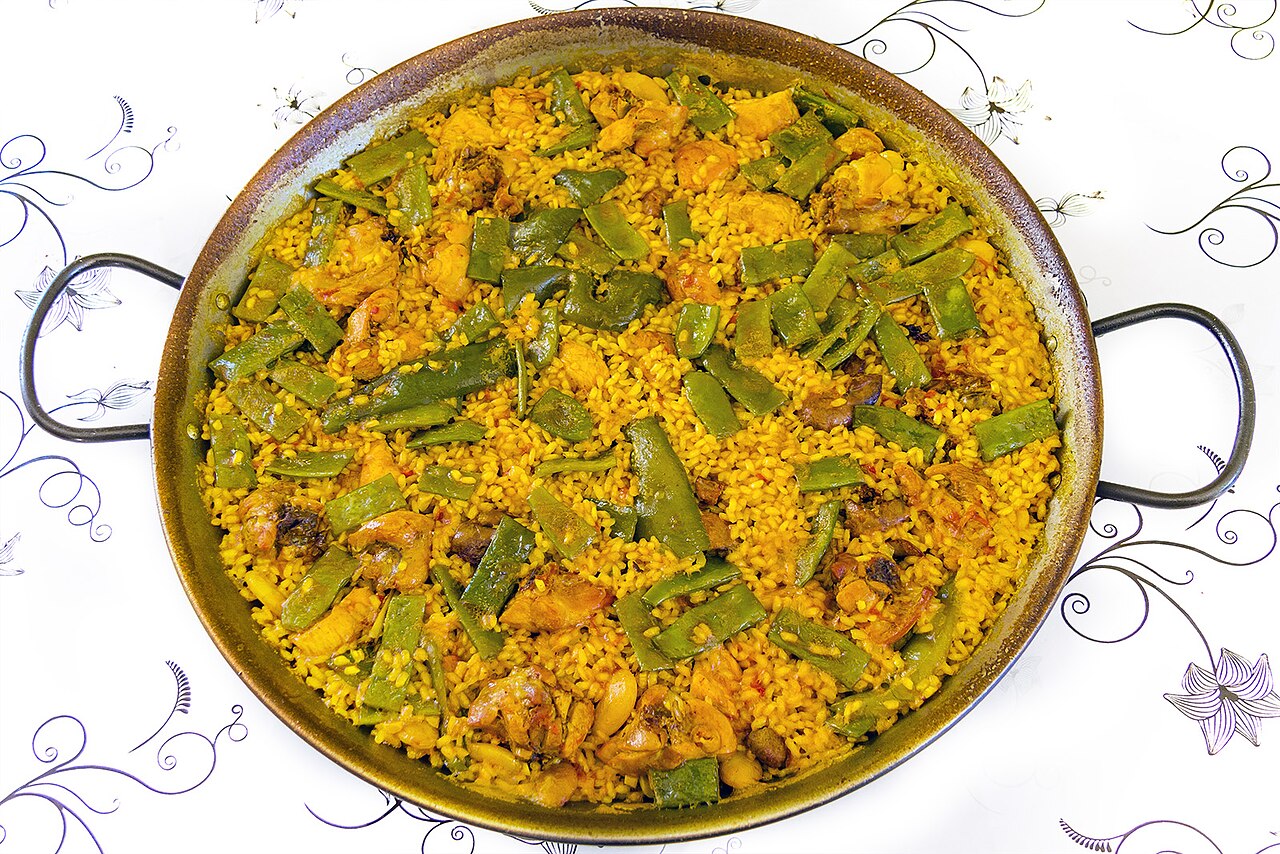

Plan a Spanish cooking holiday by choosing one technique you want to understand, then finding the place that gives it meaning. “Spanish cuisine” is too broad for a useful week: Valencia’s rice, Basque pintxos, an Andalusian kitchen and Madrid’s market city ask for different ingredients, timing and judgement.
Choose the lesson before the itinerary
In the first hour, you should move beyond introductions and tasting. You might build stock, control heat under a wide rice pan, balance a pintxo, prepare a sofrito or correct the texture of a sauce. The teacher should let you taste, explain what changed and adjust the next attempt.
A market visit can make the kitchen more intelligible when you identify season, quality and substitution. It should not consume most of the advertised class. A chef demonstration is useful for watching difficult stages. A food tour teaches place and eating culture. A hands-on lesson gives you a workstation and meaningful preparation.
Four useful starting points
Valencia is the clearest choice for rice technique when the lesson names the variety, stock, heat and pan. San Sebastián suits pintxos and Basque kitchen craft. Seville can introduce Andalusian ingredients and city foodways. Madrid gives breadth, markets and the chance to compare local dishes with food that arrived through the capital.
Barcelona gives you many menus to choose from. Check whether your lesson focuses on Catalan cookery, a wider Mediterranean approach or familiar visitor favourites. Place comes from the method and explanation, not the postcode alone.
Check the working kitchen
Start by asking which dishes you will make and how much time you will spend at the workstation. Find out who teaches, which language they use and whether you receive recipe notes. Share allergies and dietary needs before paying, and ask how cross-contact is controlled. If a package includes drinks, confirm that the complete learning experience can be delivered alcohol-free without replacing teaching time.
For three days, choose one base and one serious class. A week can support a second kitchen when it adds a genuinely different method. Leave time between cities: one unhurried lesson followed by a market or meal usually teaches more than a national tasting checklist.
What we checked
Sources behind the local details
We used these sources for local history, geography and cultural context. Opening times, access and programmes can change, so confirm current details with the venue or host. Sources checked on 22 August 2026.