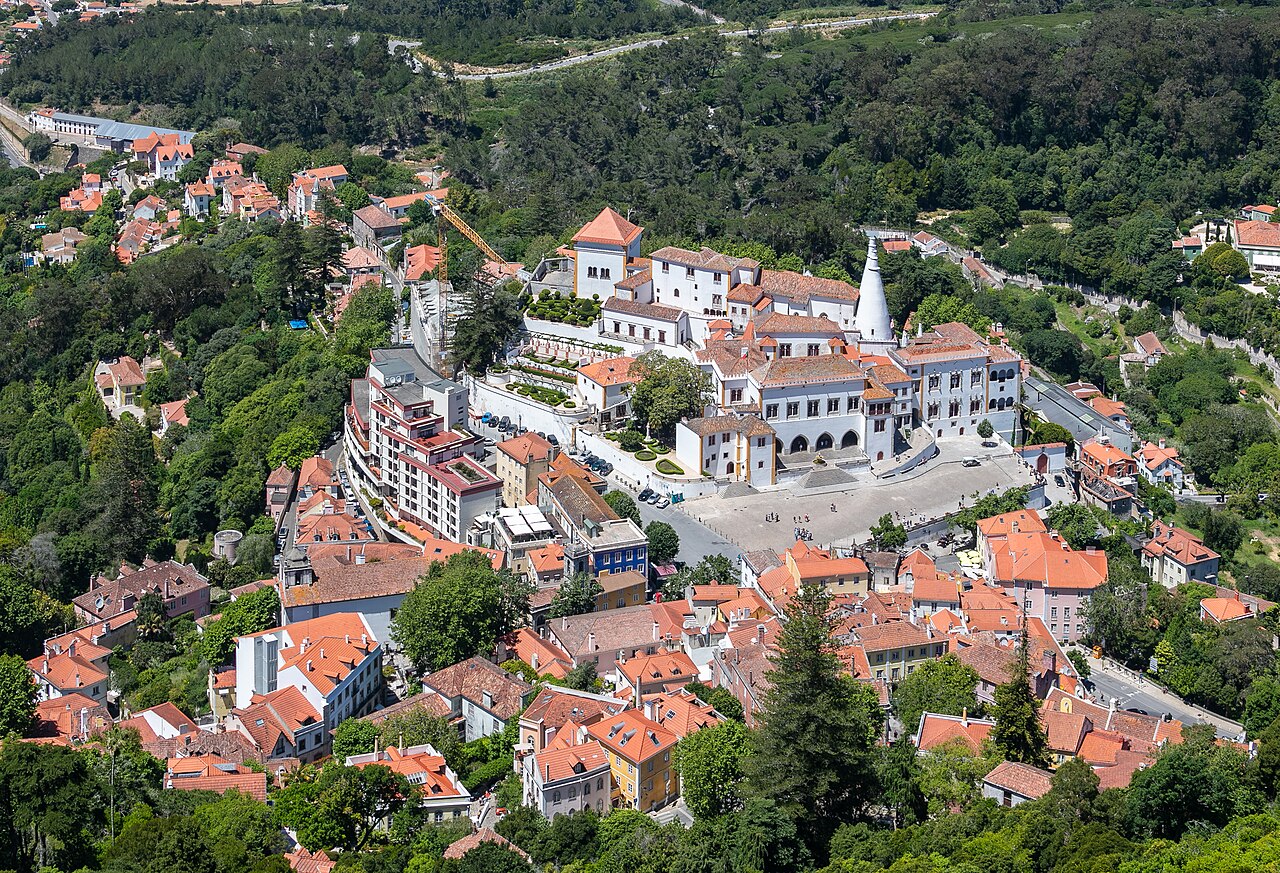

Sintra rewards walking with a question. Its palaces matter, but water, rock, woodland, gardens and routes between them are what make the landscape legible.
UNESCO recognises Sintra as a cultural landscape, not simply a collection of monuments. Nineteenth-century Romantic design brought architecture together with parks, watercourses, ponds and paths, mixing local and exotic trees to shape atmosphere and views. On foot, you can test where a scene feels wild and where planting, drainage, a bend in the path or a framed opening reveals deliberate design.
A guide can ask you to notice how terrain shaped a path, how planted woodland changes light and moisture, or how a designed view is revealed. You observe, discuss and use the clue again later. At a second stop, try separating the natural landform from the choices made by gardeners, architects and estate owners. That is guided interpretation. Simply covering kilometres between monuments is a walking tour.
Ask for distance, ascent, surface, pace, entrance requirements and the exact interpretive theme. Sintra’s humidity, heat, mist, storm damage and fire restrictions can change the route. The guide should have a real alternative rather than forcing the advertised path in poor conditions. A shorter walk understood well is better than a rushed palace circuit.
The town is outside Lisbon municipality. Include the transfer honestly or stay locally, especially for early starts. Footwear and step-free alternatives should match the actual path, not a generic difficulty label. If a palace or park admission is part of the walk, ask whether queue time reduces the guided observation time.
What we checked
Sources behind the local details
We used these sources for local history, geography and cultural context. Opening times, access and programmes can change, so confirm current details with the venue or host. Sources checked on 21 August 2026.