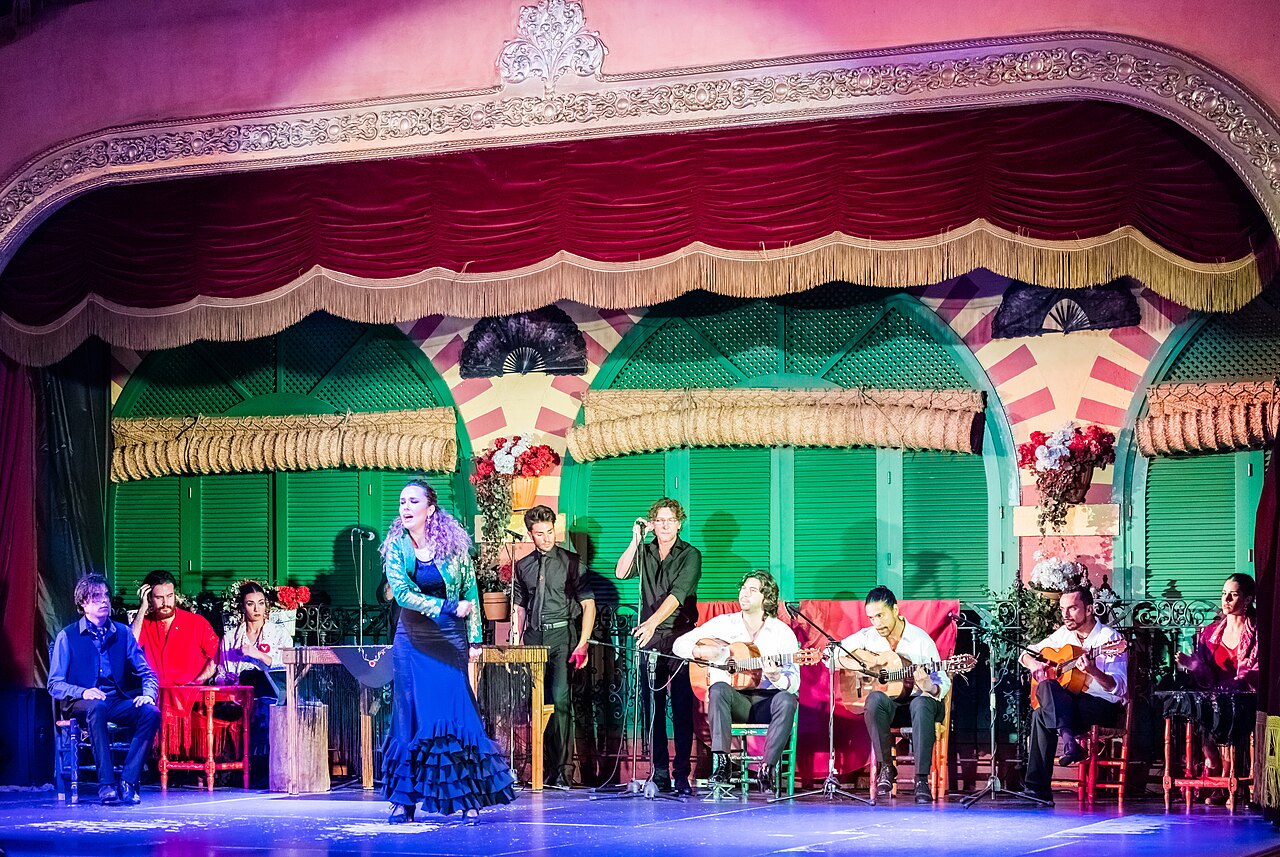

Seville gives flamenco a dense setting of studios, peñas, tablaos and festivals. Begin by choosing what you want to practise. Dance, palmas, voice and guitar share a conversation, but each needs its own first lesson.
Find the compás before the choreography
A useful beginner session often starts with listening. The teacher marks the pulse, introduces the accents and helps you clap a short pattern. You repeat it slowly, hear where it slips and try again. Dance may then add posture, arms, weight transfer or a small footwork phrase.
Ask which palo fills the class. Soleá, bulerías, tangos and alegrías do not become interchangeable because they appear on the same beginner timetable. You do not need a catalogue; you need enough time inside one form to recognise its shape.
For dance, confirm the floor and footwear. Ask how impact is adapted for knees, hips or limited mobility. Voice and guitar learners should check level, instrument access and whether individual correction is possible.
Let performance deepen the lesson
A tablao or festival performance can help you watch the relationship among singer, dancer, guitarist and palmas. Use it to sharpen what you notice in the next lesson. A museum visit or guided talk offers interpretation, while tuition gives you repeated practice and feedback.
Seville belongs at the heart of a flamenco learning route without claiming sole ownership of an art shaped across Andalusia and beyond, with the essential contribution of Gitano communities. Cádiz, Jerez, Granada and other places carry their own forms and histories.
Ask before you join
Start with the teacher and discipline, then ask which palo and level the lesson serves. Check how much time you will spend practising, whether the floor suits the work, what footwear to bring and whether recording is welcome. If a class is attached to dinner or drinks, make sure the full learning session is available alcohol-free.
Read the flamenco palos guide before choosing. Pair practice with Seville cooking or Triana ceramics on a separate half-day. Leave with one rhythm you can keep, one correction you understand and a better ear for the next performance.
What we checked
Sources behind the local details
We used these sources for local history, geography and cultural context. Opening times, access and programmes can change, so confirm current details with the venue or host. Sources checked on 22 August 2026.