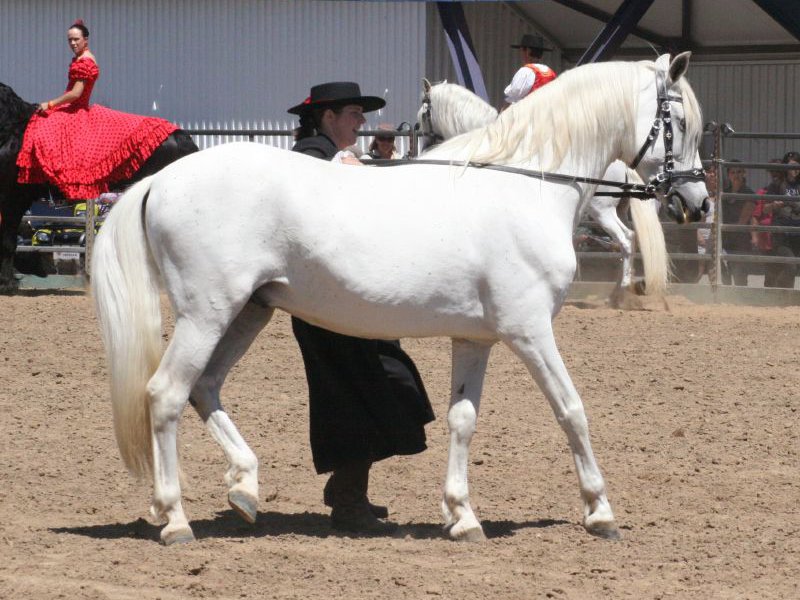

Choose Spain by the riding you want, then check whether the programme actually teaches it. Andalucía offers the clearest route into formal equestrian practice. Menorca gives you a long coastal trail. The Ebro Delta, Sierra de Gredos, Pyrenees and Picos de Europa ask for different terrain judgement. They are not interchangeable riding holidays.
Match the place to the purpose
Andalucía suits travellers who want instruction alongside a strong equestrian context. In Jerez, the Real Escuela Andaluza del Arte Ecuestre publishes personalised intensive courses for professional and amateur riders. Its practical training may add doma vaquera, carriage driving or work in hand. Book it for that named Jerez programme; a trail elsewhere may offer a different format.
Menorca’s Camí de Cavalls circles the island through coves, cliffs, woodland and exposed coastal sections. Spain’s official tourism guide also points riders towards the Ebro Delta’s rice-field landscape, inland Gredos and the mountain terrain of the Pyrenees and Picos de Europa. These are route choices first. Ask about footing, climbs, road crossings, pace and escape points before treating scenery as a suitable plan.
Spain also has RFHE-certified equestrian itineraries, including historic and rural routes. Certification means the marked itinerary meets route-level minimums for safety, quality and rider information. Your operator, instructor, horse match and lesson still need their own checks.
Know what you are booking
A lesson or coached session protects time for the teacher to watch you ride. You should practise one declared skill—perhaps position, balance, an aid or pace control—hear a specific correction and try it again.
A guided trail has a different first duty: moving horse and rider safely through the named terrain. A guide may give useful riding pointers. Without protected coaching time and feedback, the outing functions as guided riding. Ask how much controlled coaching happens before the group leaves and whether mixed levels receive separate support.
A carriage ride makes you a passenger unless an instructor teaches rein handling and gives you supervised practice. An equestrian show demonstrates trained movement. A stable visit or museum can explain horses, tack and tradition. Each can deepen the trip, but none should be sold as riding tuition.
Use the first hour as a selection test
For a taught holiday, a useful first 60–90 minutes would include a rider history, a controlled horse–rider assessment and work on one achievable skill. The teacher should observe, correct and let you repeat the movement before deciding whether open terrain is appropriate.
That is a selection standard, not a claim that every Spanish ride follows this sequence. Ask the organiser to describe its actual first session. Tell them your recent riding experience, confidence, height and weight so they can explain the match respectfully. Find out what happens if the horse, group pace or route proves unsuitable.
Check route safety separately
Start with the exact itinerary and expected pace. Read the surface, climbs and exposed sections against your own experience. The organiser should explain who leads, how many riders join and which helmets are provided. Insurance and emergency details should be easy to find. Ask how the team responds to a fall or loose horse. Mountain, coastal, wetland and open-plain routes need different weather alternatives. Heat may change the start time, distance or decision to ride.
An RFHE route mark is useful evidence about the path. It is not a substitute for the operator’s current risk plan or an honest assessment of your level.
Let horse welfare change the plan
The RFHE welfare code puts the horse’s welfare above commercial or competitive pressure. It covers suitable management, training within the horse’s physical capacity, appropriate equipment, care, food, water and rest.
Turn that principle into practical questions. How are horses matched and rotated? Who checks tack fit and soundness? Where do they rest and drink? When do heat, footing or fatigue shorten the route? A responsible team should be willing to substitute a horse, slow the group or stop the ride.
For a short break, choose one exact base and decide whether tuition or landscape is the priority. For a longer holiday, combine arena coaching with a suitable route only when the horse, rider and recovery plan support both. The best result is not the greatest mileage. It is one riding skill you understand better and a more informed eye for the horse carrying you.
What we checked
Sources behind the local details
We used these sources for local history, geography and cultural context. Opening times, access and programmes can change, so confirm current details with the venue or host. Sources checked on 22 August 2026.