_edited.jpg)
Salamanca earns its place in Spain’s learning map through one exceptionally clear purpose: concentrated Spanish study. The university tradition matters, but the practical advantage is simpler. Classes, accommodation and daily errands can sit close enough together for you to practise without spending the week crossing a large city.
Build a corrected speaking routine
A Spanish course in Salamanca should begin with placement and a clear target. Ask how many hours are actually taught, how much speaking receives specific correction and what independent task you can attempt between lessons.
The compact centre makes a useful rhythm possible: class, a short exchange in a shop or café, notes on what went wrong, then another attempt. A cultural visit can extend the course when the teacher prepares and reviews the language. Attendance alone is not immersion.
Salamanca is sometimes marketed through claims about especially pure Spanish. Treat those claims cautiously. A good course teaches widely useful pronunciation, grammar and usage while helping you understand local speech without turning one accent into a national standard. The Spanish varieties guide gives that choice more context.
Let the city sharpen your observation
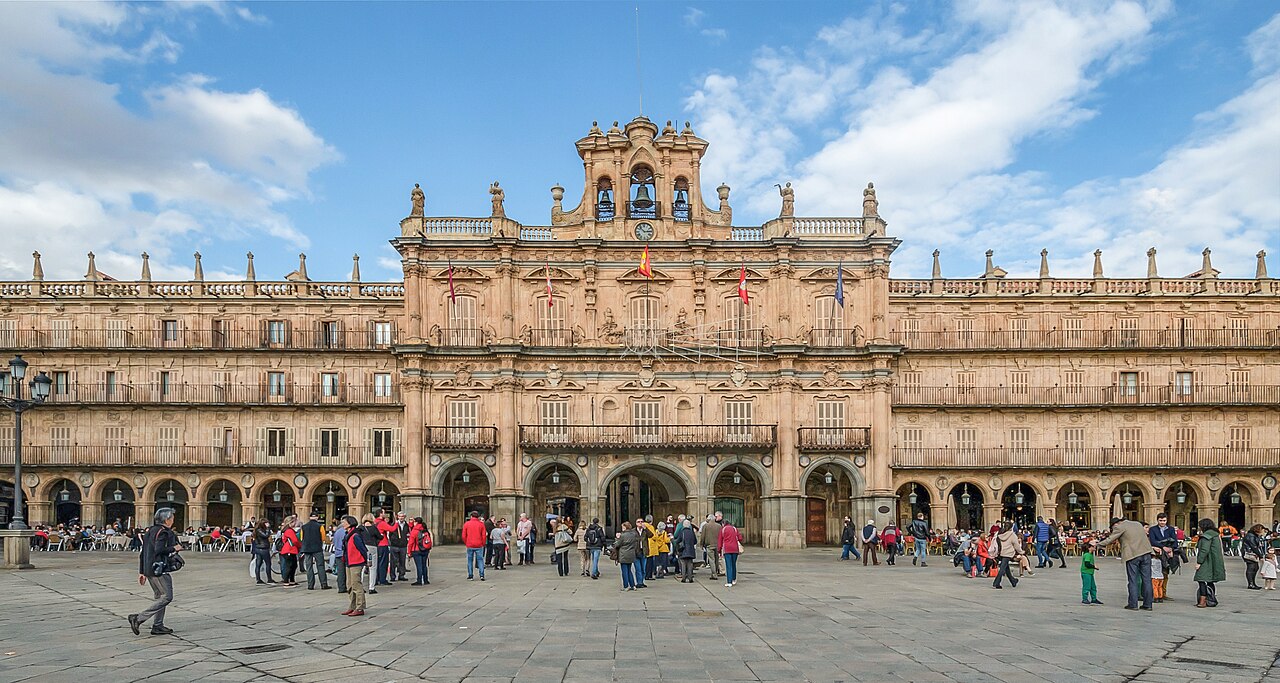
The historic centre and university buildings offer a manageable route through teaching, civic life and architecture. Villamayor stone gives many façades their warm colour and distinctive weathering. A guide can help you compare the carving, repairs and changing light across several buildings.
Guided interpretation — not a class is also a useful companion to language study. Follow one question—how the university shaped the city, how stone changes across buildings, or how public spaces support student life—and use it as the subject of your next conversation task.
Stay long enough for repetition
A long weekend can offer a taster, but a week creates a stronger cycle of placement, teaching, independent use and review. Two or more weeks make progress easier to notice, especially when you keep the daily plan steady rather than filling every afternoon.
Salamanca’s gift is focus. Choose it when Spanish is the main reason for the trip and let the city make practice convenient.
What we checked
Sources behind the local details
We used these sources for local history, geography and cultural context. Opening times, access and programmes can change, so confirm current details with the venue or host. Sources checked on 22 August 2026.