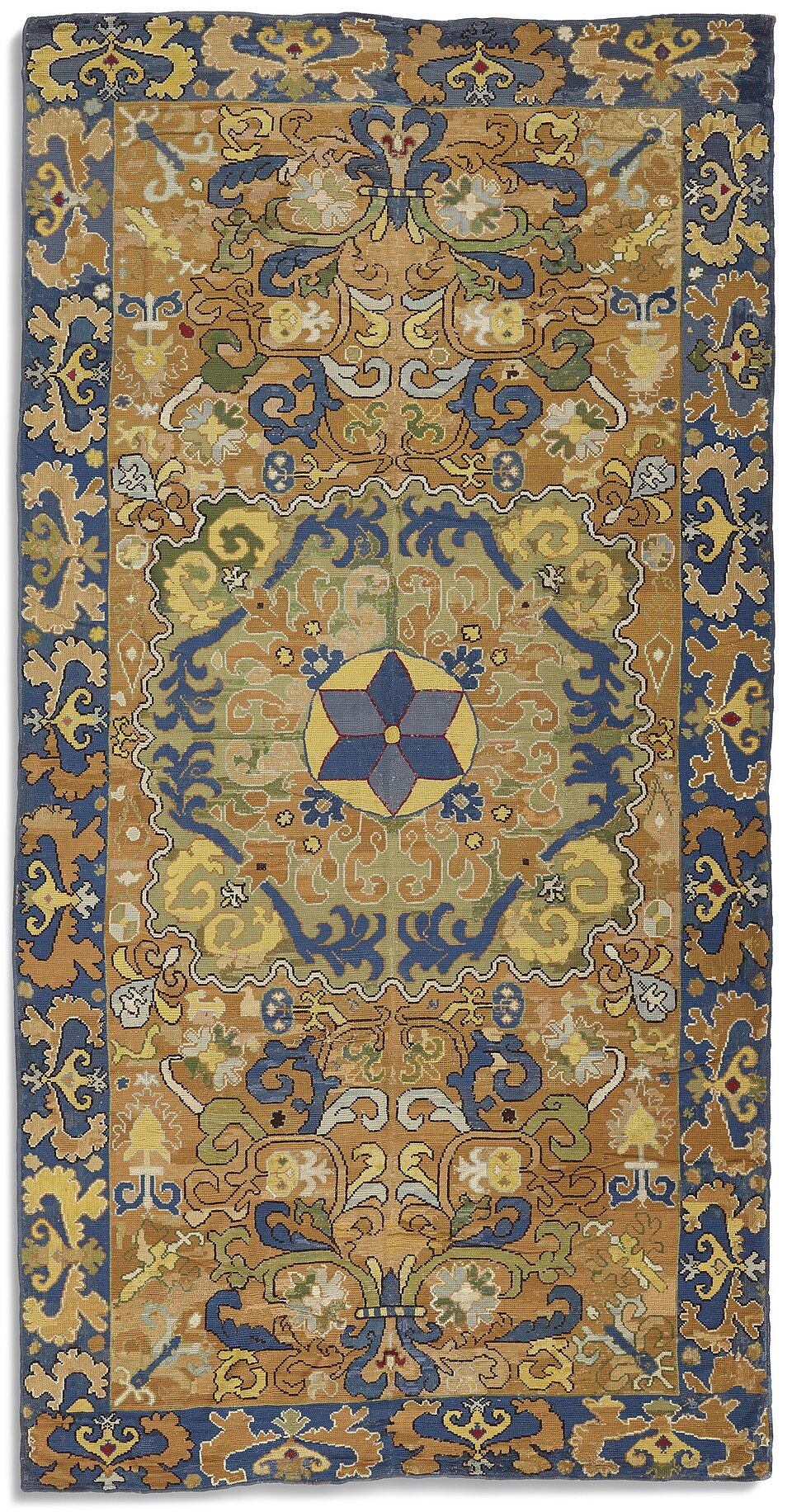

An Arraiolos lesson should begin with the right vocabulary: these rugs are stitched on a ground, not woven on a loom.
That distinction changes what you learn. The canvas supplies the structure; wool thread builds the motif through embroidery. The Arraiolos stitch is recognised within Portugal’s traditional embroidery knowledge, and the town’s interpretation centre traces documentary references to the rugs back to 1598 while presenting archaeological work that may point earlier. You do not need to claim a single invented origin story to appreciate how closely the practice belongs to Arraiolos.
The teacher can show how a design is transferred, how wool and canvas relate, and how the named stitch is formed. You make a short row, receive correction on tension, direction or spacing and repeat it. Then compare the front and back so you can see what steady work looks like. A small sample is a realistic outcome; a finished rug is not.
The Centro Interpretativo do Tapete de Arraiolos can add history, pattern knowledge and the modern work of preservation and certification. It does not provide tuition merely because the craft is explained there. A class requires a practising embroiderer, materials, time and feedback. Ask who teaches, which stitch you will practise and whether the session interrupts paid production.
The work is seated and repetitive, so lighting, hand comfort and pace matter. Arrange the visit before leaving Évora and treat it as the principal purpose of the half-day.
What we checked
Sources behind the local details
We used these sources for local history, geography and cultural context. Opening times, access and programmes can change, so confirm current details with the venue or host. Sources checked on 21 August 2026.