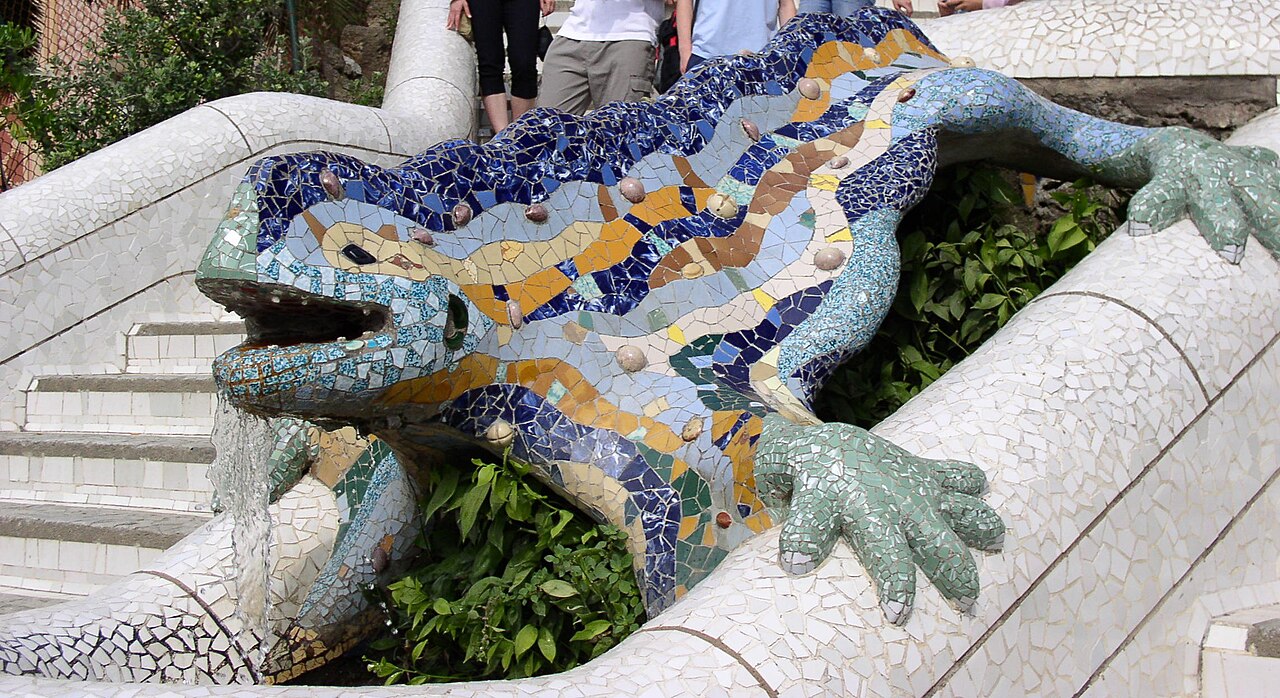

Barcelona is a natural place to study trencadís: a mosaic surface assembled from irregular fragments, closely associated with Modernisme and visible in works by Gaudí and his collaborators. A visitor workshop should use that context without claiming that a small souvenir reproduces a protected building technique in full.
Build from fragments
In a realistic first hour, the teacher introduces the substrate, adhesive, cutting or selection method and safe handling. You plan a simple composition, place fragments, correct gaps and edges, then understand how grouting and curing finish the work.
Ask whether pieces are pre-cut and whether you use ceramic, glass or another material. Cutting shards adds skill and risk; prepared pieces create a gentler beginner session. Both are valid when described honestly.
Trencadís is not the same as painting a ceramic tile. It also differs from alicatado, cuerda seca and moulded arista techniques. Read the Spanish tilework guide if you want to compare them.
Respect the architectural source
A visit to Park Güell or another Modernisme site can help you observe scale, surface, colour and how mosaic follows a curved form. It is interpretation, not a workshop. Do not touch or make rubbings from protected surfaces.
The practical class should happen at a declared studio with suitable tools, eye protection where needed and clear cleanup. Ask who teaches, group size, active making time and whether the object is ready to carry or needs curing.
Leave with more than a pattern
The strongest beginner outcome is a small piece plus a better understanding of joints, negative space, edge control and the difference between design reference and imitation. Pair the workshop with Barcelona architecture interpretation on another half-day, then look again at the city’s surfaces with your own making decisions in mind.
What we checked
Sources behind the local details
We used these sources for local history, geography and cultural context. Opening times, access and programmes can change, so confirm current details with the venue or host. Sources checked on 22 August 2026.