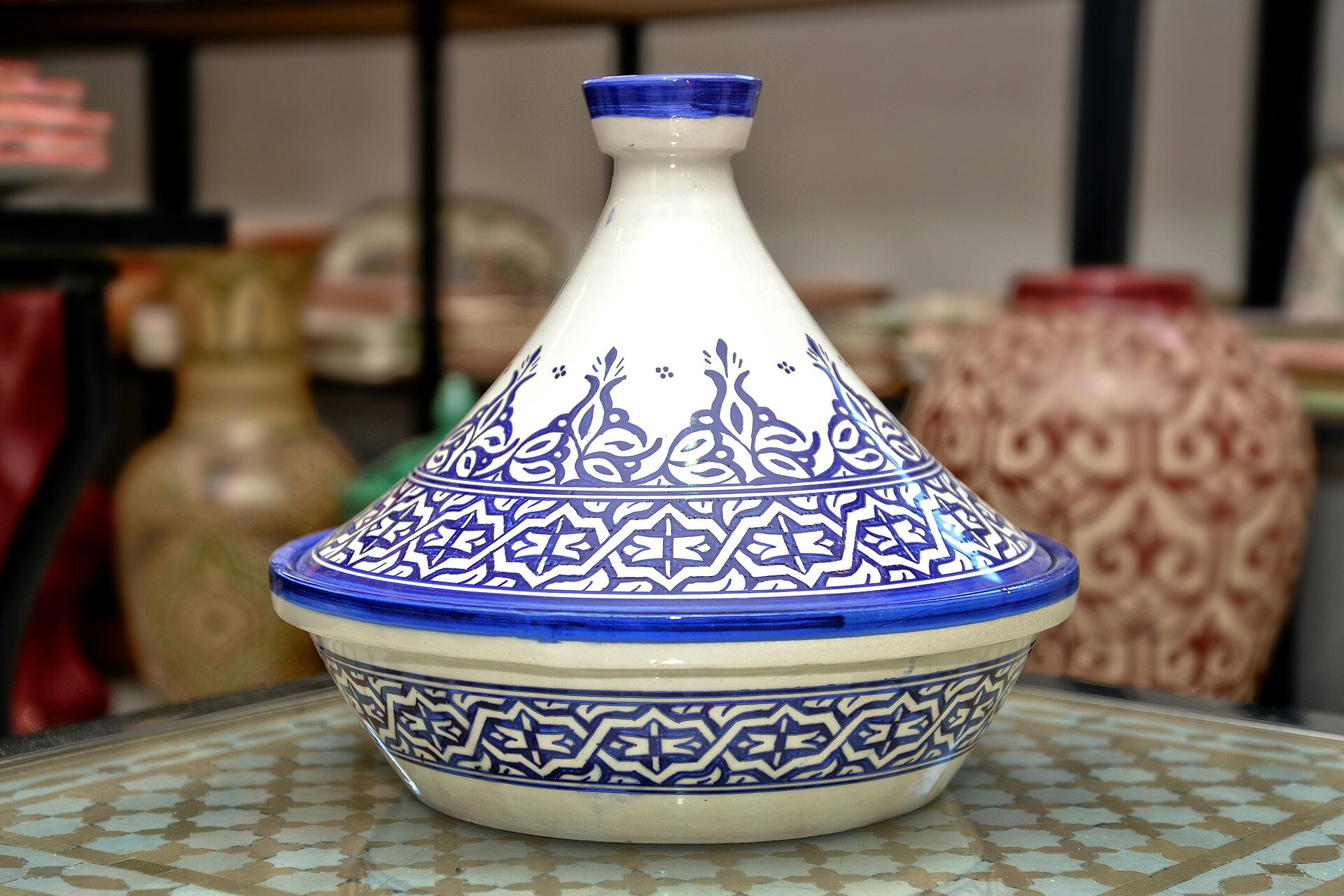

“Tagine” can mean the conical clay vessel, the dish cooked inside it, or the whole slow-cooking method. That small language detail changes what a class should teach. A recipe is useful; understanding heat, moisture and layering is what helps you cook another tagine after you get home.
The quick decision map
| If you want to… | Look for… | Watch out for… |
|---|---|---|
| Recreate the dish at home | Heat control, ingredient order and equipment substitutes | A recipe card with no explanation |
| Cook in clay | Food-safe cookware, gradual heating and clear handling | Decorative pottery used on direct heat |
| Improve flavour balance | Tasting at stages and reasons for each spice or preserved ingredient | “Secret spice” language instead of teaching |
| Learn beyond one recipe | A base method that adapts to vegetables, meat or fish | Watching the host do every important step |
| Manage dietary needs | Ingredients and cross-contact discussed before the market visit | Discovering stock, butter or allergens after cooking starts |
What the conical lid actually does
A tagine cooks with gentle, enclosed heat. Moisture released by the ingredients circulates under the lid and returns to the food. That does not mean the pot is magic or that water never matters. The cook still judges the ingredient, heat source, vessel and cooking time.
Traditional and modern kitchens use different setups: clay over charcoal, a brazier, gas, an oven or a diffuser on a stovetop. A strong class explains the setup you are using and how to adapt it safely at home.
A method you can repeat
Exact recipes vary by household and region, but a useful learning sequence looks like this:
- prepare and season the main ingredients;
- build an aromatic base;
- arrange ingredients according to how quickly they cook;
- add a measured amount of liquid or rely on moisture-rich produce;
- bring the vessel up to heat gradually;
- cook gently without unnecessary stirring;
- check doneness, sauce reduction and seasoning;
- finish with ingredients whose flavour or texture should stay bright.
The teacher should explain why the vegetables are stacked, when the lid may be lifted and how to rescue a sauce that is too thin or a base that is catching. Those are the notes you will remember when the recipe card has disappeared into a kitchen drawer.
The pot deserves a safety question
Not every colourful tagine sold as decoration is suitable for cooking. Ask whether the vessel is food-safe, whether the glaze has been tested where relevant, how it should be seasoned and which heat sources it can tolerate.
Clay can crack with thermal shock. Heat should rise gradually, and a diffuser may be needed on some stovetops. If you are buying a pot to take home, check its cooking purpose and care instructions—not only whether it fits in your suitcase.
What a good class should let you do
You should have real responsibility: chopping, seasoning, arranging, managing heat, tasting and adjusting. A host may prepare slow or specialist stages in advance, but you should not spend two hours drinking tea while somebody else cooks lunch.
Market visits can add value when the teacher shows how to choose ingredients and connects them to the menu. They add less value when the group simply follows a guide through a busy souk and returns to a fully prepared kitchen.
Ask for the group size and workstation setup. “Hands-on” can mean one knife between twelve people unless somebody checks.
Regional variety is part of the lesson
Moroccan tagines differ by household, season and place. Coastal cooking may favour fish; inland tables may lean towards meat, dried fruit or preserved lemon; vegetarian versions draw heavily on market produce and pulses. No single recipe represents the country.
Compare Marrakech cooking classes, Fes cooking classes and Essaouira cooking classes for different settings and food traditions. The Morocco cooking-holiday hub helps you choose between a short class and a deeper stay.
Troubleshooting is the part worth writing down
A teacher should show you what “gentle heat” looks and sounds like. Ask where the liquid gathers, how quickly steam develops and when the base needs checking. If the sauce is thin, the answer may be more time with the lid adjusted. If the base catches, adding a dramatic glass of water may save lunch but also change texture and seasoning. Learn the early warning signs.
Vegetables cook at different speeds. Dense pieces may need to sit closer to the heat or be cut smaller; delicate ingredients may join later. The familiar conical arrangement can support even cooking, but it is not a sculpture competition. Your carrots do not receive points for height.
Taste before the final garnish. Notice salt, acidity, sweetness, spice and sauce concentration separately. Your teacher can explain what is still adjustable and what needed attention earlier. This turns one recipe into a transferable cooking method.
Repeat it without a clay tagine
A heavy lidded pan, casserole or Dutch oven can reproduce many slow, moist cooking conditions. The flavour will not come from owning a conical lid alone. Ingredient quality, browning or gentle sweating, layering, moisture and heat control still do the serious work.
Ask the teacher for a home-equipment version with approximate heat, pan size and timing. Record sensory cues as well as minutes: onion softness, sauce thickness, aroma and the resistance of the main ingredient. Home stoves vary; useful instructions survive that fact.
If you do buy a clay vessel, ask whether it is decorative or intended for cooking, how to season it and whether it suits gas, electric, induction or oven heat. A diffuser may be needed. Never assume an attractive glaze is food-safe.
Menu choice and your time at the stove
Choose a menu that leaves room to learn. One tagine, a salad and bread can teach more than five dishes assembled at speed. Ask which elements each learner controls and whether the group shares one pot. Sharing can be sociable; it becomes thin instruction when only one person seasons and the rest receive the important role of watching.
For children or cautious beginners, the host can adapt knife work, heat contact and spice strength while keeping real tasks. Dietary changes should be agreed before shopping so the substitute still fits the method rather than arriving as a separate emergency plate.
Questions worth asking
- Which tagine will we cook, and why is it local to this menu?
- Will each participant have a practical role?
- Which heat source and vessel will we use?
- Is the cookware food-safe and suitable for direct heat?
- Will the teacher explain substitutions for home cooking?
- Are allergies, vegetarian needs and cross-contact handled?
- Is the class alcohol-free?
- Does the price include the market visit, meal and recipe notes?
- What language is used, and how large is the group?
Keep learning
Read the ras el hanout guide to understand Moroccan spice blending without hunting for one mythical formula. Then return to the Morocco learning hub for bread, pottery, language and craft routes that sit naturally around a cooking day.
Enquire with the useful details
Tell GoLearnTo your dates, city, cooking level, dietary needs, group size and whether you prefer a market visit, family kitchen, professional school or multi-day course. Add the dish you would love to master. We will help check whether the class teaches the method, not only serves the lunch.
What we checked
Sources behind the local details
We used these sources for local history, geography and cultural context. Opening times, access and programmes can change, so confirm current details with the venue or host. Sources checked on 14 August 2026.