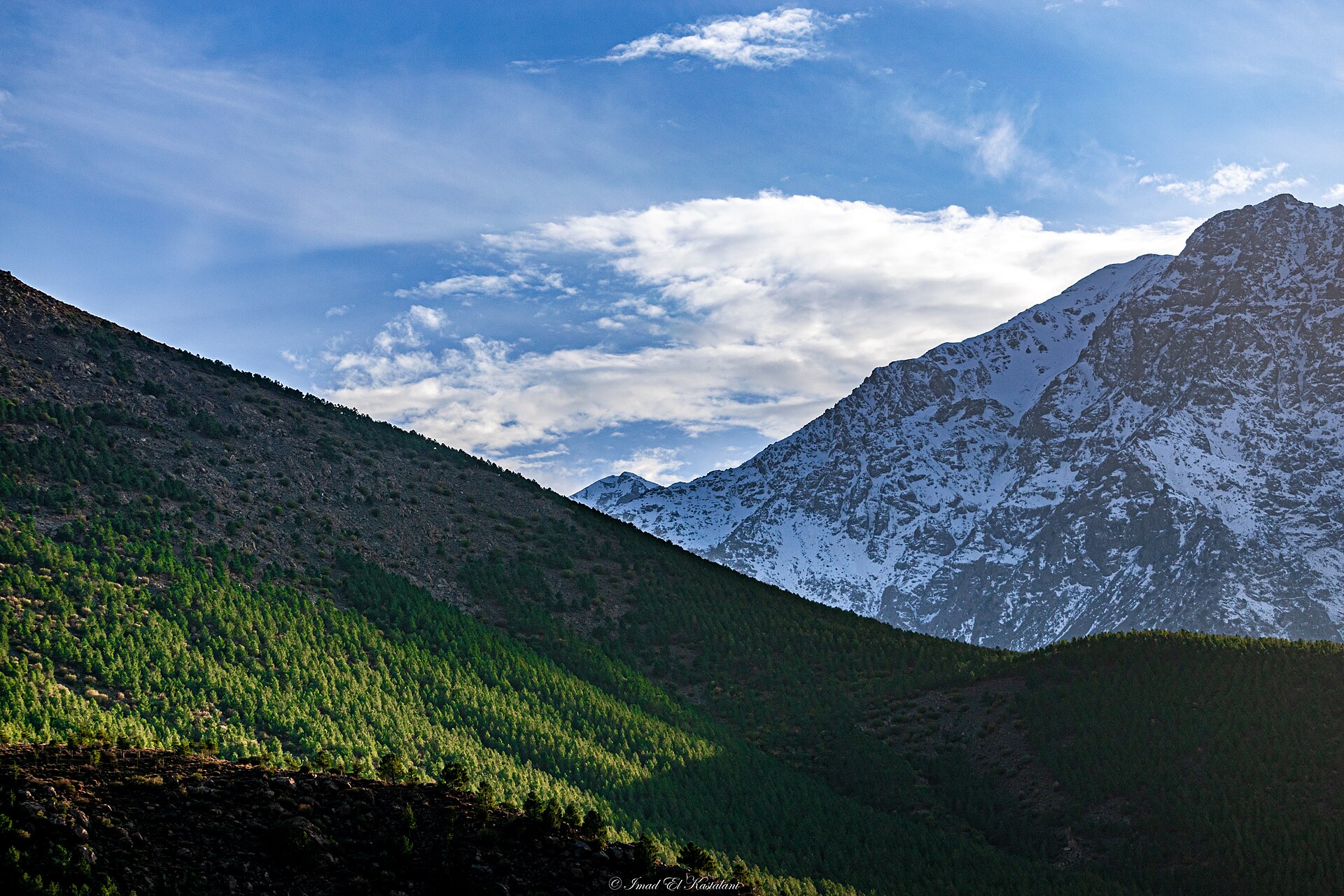
The Atlas Mountains are not one destination. Morocco’s High Atlas, Middle Atlas and Anti-Atlas differ in terrain, settlement, ecology, access and the learning systems they can honestly support.
The Atlas supports six strong learning routes. Two possible hosts publish useful details, but neither has confirmed its current programme with GoLearnTo. Generic “village immersion,” whole-country photo tours and weaving that conflicts with our alcohol-free policy are not included.
Choose the practice before the famous place
| If you want to… |
Start with |
What to ask |
| Read a landscape while walking |
Interpreted walking |
Sub-range, base, route, guide role and method you can repeat |
| Understand deep time and landform |
Geology field learning |
Geosite, interpreter, observation task and access |
| Follow fibre into a finished piece |
Weaving and natural dye |
Artisan, stages, materials, feedback and compensation |
| Reproduce a cooking method |
Village cooking |
Place, cook, hands-on share, food controls and recipe |
| Improve a second frame |
Photography |
Tutor, exercises, critique, permissions and review |
| Understand an inhabited landscape |
Cultural interpretation |
Local source, consent, evidence, benefit and boundaries |
High → Middle → Anti-Atlas
Commercial results often use “Atlas Mountains” to mean Imlil, Toubkal and the High Atlas. The Middle Atlas has its own forest, lake, volcanic-plateau and winter contexts. The Anti-Atlas is an arid south-western system with different materials, routes and communities.
A regional label never replaces the actual base. Route Imlil and higher-mountain intent to its city cluster. Forest and winter learning to Ifrane; film, oasis and southern gateway topics to Ouarzazate; and ksar learning to Aït Benhaddou.
Lead → interpret → teach
A natural-spaces guide may lead and interpret a route without teaching navigation, geology or transferable mountain judgement. Those are different promises.
Check the named guide, current category, working language, assignment and activity scope. A legal category does not tell you about teaching quality, route suitability, insurance or who will actually lead.
Landscape → field note
M’Goun UNESCO Global Geopark offers landforms, fossils, dinosaur footprints and more than 200 million years of Earth history. For a real field lesson, ask for a named interpreter, observation task, route and time for questions.
A useful format asks you to observe a feature, record what you see, hear an explanation, test it at a second feature and revise a field note. Ask for the exact geosite, access arrangement and interpreter before travelling.
Fibre → finished piece
Atlas textile learning can include wool preparation, spinning, vegetable dye, design, warp and weaving. A finished textile does not prove you performed every stage or received feedback.
A weaving day should name the artisans and translator, separate observation from hands-on work and explain materials, dyes, feedback, photography, ownership and payment. We exclude the current High Atlas foothills option because it conflicts with the alcohol-free policy.
Market → repeatable method
The strongest regional cooking lead describes market buying, meal preparation with a cook and interpreter, tagine, a charcoal brazier and bread from a clay oven. Participation is credible; feedback and repeatability remain not confirmed.
A qualifying class explains ingredient choice and method, lets you perform meaningful stages, corrects an attempt and leaves a recipe or substitution note. Exact Ouirgane, Asni or Tahanout location, cook, food controls, heat, accessibility and alcohol-free scope must close.
First frame → critique → second frame
A photography itinerary can cross the Atlas and include image reviews without teaching much. Look for an assignment, tutor observation, one specific change, a second attempt and a final image selection.
The provider must separate teaching hours from transport and scenic stops. Portraits, homes, work, ceremonies and stories require specific permission and clear image-use terms.
UNESCO connects M’Goun communities with terraces, irrigation, agriculture, weaving and pottery. Cultural-landscape learning should connect visible features to present-day livelihoods without pretending one Amazigh identity represents the whole Atlas.
Homes, cooperatives and personal stories require permission. Use “Amazigh” unless the community or individual chooses another term. Avoid “untouched,” “timeless,” “tribal” and “authentic village” shorthand.
Live conditions need a timestamp
Morocco’s meteorological authority updates vigilance at least twice daily. Weather, route, road, venue, teacher and access checks must carry a current time rather than become evergreen promises.
Post-earthquake conditions vary by village, road, home and livelihood. The whole High Atlas cannot be labelled recovered, closed, open or unchanged. Ask the local host what is operating now and how visitor money is distributed.
What not to assume across the Atlas
The hub does not teach summit, altitude, navigation, climbing, skiing, rescue, emergency, medical, plant-use, equipment-use or food-safety technique. Those require named professionals and route-specific detail. For a cooking class, you should prepare meaningful parts of the meal alongside the host. Choose a clear learning format. Weaving needs guided practice, geology needs field observation, and photography needs an assignment plus feedback.
Every product and inclusion must be explicitly alcohol-free. Compare Morocco, the narrower Imlil and Ifrane clusters, or review travel insurance questions.
Enquire with the useful details
Tell GoLearnTo the sub-range, exact base, skill, dates, starting level, preferred language and access or dietary needs. We use your enquiry to check the guide, base and date; it is not a booking.