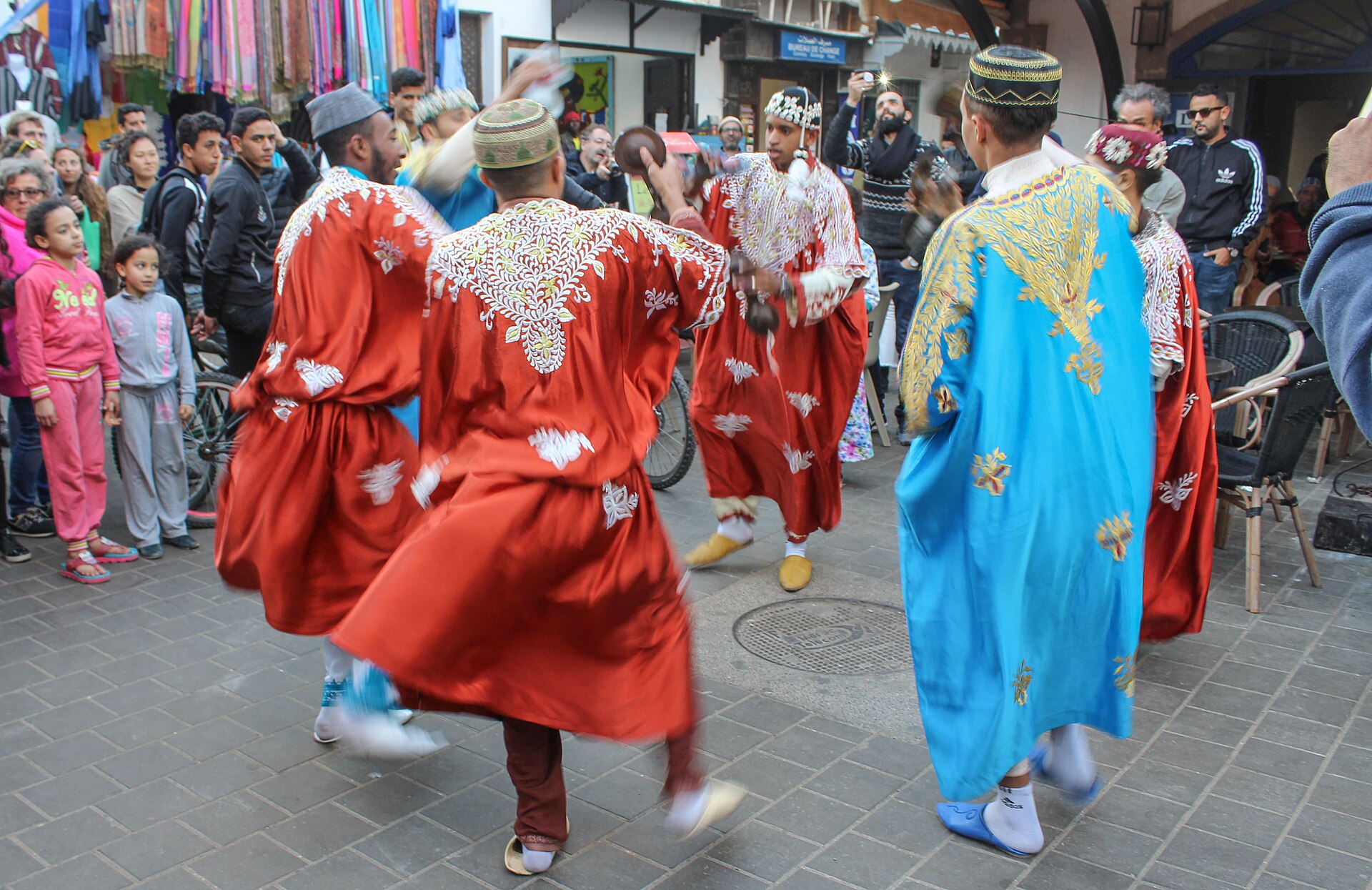
Essaouira teaches through wind, hand and rhythm. Wind shapes surfing and sail-powered sports. Hand connects embroidery, thuya marquetry, cooking, photography and painting. Rhythm links the guembri, krakebs and movement within Gnawa practice. Choose the skill first: a surf coach, Gnawa musician and thuya woodworker teach in completely different settings and rhythms.
Start with the experience you want. Learn a guembri pattern with a musician, shape a thuya detail with an artisan or improve your photographs with a tutor who reviews them. Essaouira supplies the inspiration; a good teacher turns it into practice.
Choose your learning route
| If you want to… |
Start with |
What to ask |
| Build wave-riding fundamentals |
Surfing |
Condition choice, learner ratio and active water time |
| Learn staged kite control |
Kitesurfing |
Wind threshold, safety system and no-wind policy |
| Handle a sail and board |
Windsurfing |
Rig choice, coached sailing time and rescue plan |
| Begin wing handling or foiling |
Wingfoil |
Exact stage, equipment and progression boundary |
| Try a guembri rhythm respectfully |
Gnawa initiation |
Learn with a named musician and understand the rhythm’s cultural meaning |
| Combine movement with krakebs |
Gnawa dance |
Taught sequence, cultural scope and safeguarding |
| Learn three hand stitches |
Embroidery |
Named craftswoman, active stitch time and piece you take home |
| Understand thuya marquetry |
Woodwork |
Material provenance and exact learner-made stage |
| Cook from market to meal |
Cooking |
Personal tasks, food controls and repeat-home notes |
| Improve a visual story |
Photography |
Assignment, critique, consent and image rights |
| Study Atlantic light and form |
Painting |
Tutor feedback and a focused observational study |
Essaouira supports eleven strong learning routes, from Atlantic coaching to Gnawa, embroidery and thuya woodwork. Some already have possible hosts; others are practical guides while we research current teachers. Each page shows what the lesson should feel like and gives you useful questions for the host.
How much time will you actually practise?
For water sports, a two-hour booking includes preparation as well as time on the water. You may check in, fit equipment and discuss the conditions before the first attempt. Ask how much coached water time is typical and what the school offers when the wind or waves are unsuitable.
Surfing, kitesurfing, windsurfing and wingfoil remain separate skills because their equipment and early progression differ. One centre may teach all four, but one generic “water-sports lesson” does not explain what you will practise.
On land, ask how the session divides its time. A cooking class should leave enough time to prepare the dish yourself. An art workshop should include an exercise and feedback. A music lesson should put the instrument or rhythm in your hands.
Festival, initiation or technical instruction?
Gnawa is a living Moroccan practice with musical, social, secular and sacred dimensions. The Gnaoua Festival is an important performance and exchange context, but attendance does not make the visitor a student. A one-hour guembri initiation can introduce holding, plucking and a basic pulse. A dance workshop can introduce movement and krakebs. Neither should promise mastery, spiritual access or ritual reenactment.
The named practitioner matters. Ask how they are credited and compensated, what material is appropriate to teach, and whether recording or photography is welcome. “Meet a local master” is not adequate evidence when the person remains unnamed.
Workshop visit or making session?
Thuya marquetry begins long before the final polish. Artisans dry and shape the wood, add inlay, sand the surface and finish it carefully. A short session may focus on one safe stage. Ask what you will try yourself and what the artisan will demonstrate.
Embroidery evidence is more practice-specific: a short workshop may introduce stem, satin and chain stitch and leave you with a finished or unfinished textile sample. We will add a host after confirming who teaches, how much personal help you receive and whether the equipment is available.
Port, Medina and beach are different classrooms
The UNESCO-listed Medina gives context for craft, architecture, trade, cooking and visual work. The working port can support food and photography interpretation. However, it is not an open studio. Its workers and identifiable subjects never become automatically available to visitors. The city beach and bay support researched water-sport centres, subject to live conditions.
Diabat, Sidi Kaouki and Moulay Bouzerktoun are nearby places, not neighbourhoods of Essaouira. Wind or waves may move the lesson. The school should tell you the beach, transfer plan and suitability before you leave. The protected Mogador or Purpuraires Islands are context, not an automatically accessible activity zone.
Cooking, photography and painting need feedback
A useful cooking class connects ingredient choice to preparation order, heat, seasoning and something you can reproduce. A private-home setting requires current consent, clear meeting arrangements and appropriate food controls.
A useful photography workshop gives you a subject to explore around the port or medina. You review a small image selection with the tutor, then try again with clearer intent. Ask before photographing identifiable people, especially at work or at home.
For painting or drawing, choose one part of Essaouira’s light, movement or architecture. Make a study, hear the tutor’s comments and improve it before you leave.
Ask these before you enquire
- Current named instructor, artist, cook or practitioner
- Exact hands-on stages, individual feedback and active teaching time
- Starting level, group size, teaching language and accessibility
- Live-condition, cancellation and alternative plan for outdoor skills
- Equipment, rescue, first-aid, insurance and safeguarding arrangements
- Tool, dust, material, food and allergy controls where relevant
- Cultural consent, practitioner credit and compensation
- Subject photography, recording and image-use permissions
- City or nearby meeting point and transfer arrangements
- Explicit alcohol-free venue, ingredients, inclusions and optional activities
- Current availability, price and cancellation terms
The possible hosts below are not paid placements and have not confirmed live availability with GoLearnTo. Their open questions help you check the teacher, exact setting, hands-on time, safety and price before enquiring.
Keep exploring
Read the deeper guide to Gnawa, understand the Medina, or compare Essaouira with the separate Taghazout surf cluster. For a coherent city stay, pair one primary skill with one lighter secondary practice rather than attempting eleven workshops before lunch. Even the Atlantic needs a tea break.
Enquire with the useful details
Tell GoLearnTo the skill, dates, starting level, preferred language and any access, dietary or equipment needs. An enquiry asks for information or an introduction; it does not confirm availability, verification, safety or suitability.