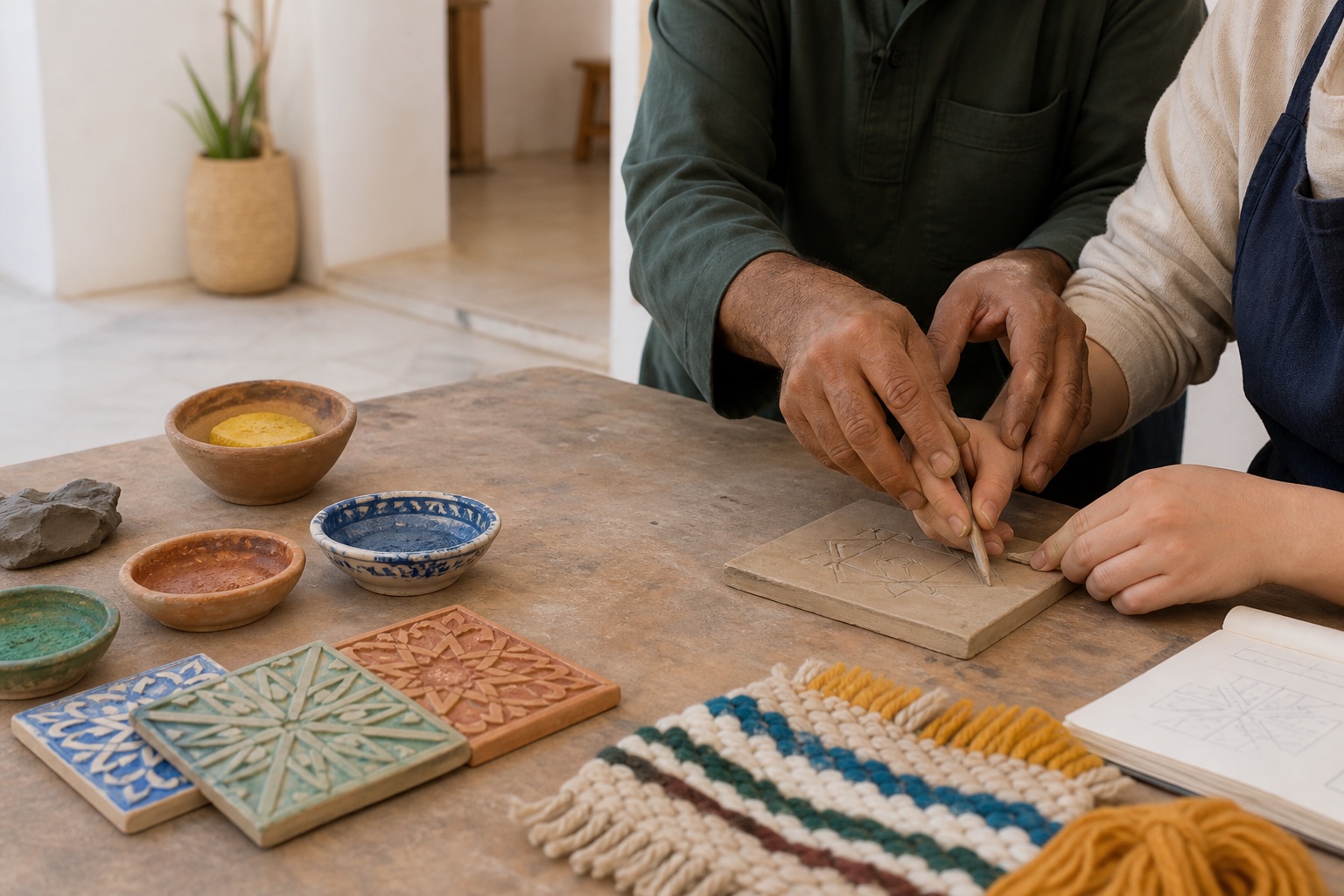
An experience is not simply “easy,” “moderate” or “safe.” Suitability depends on the date, exact site, activity, teacher, conditions and learner. GoLearnTo uses seven practical dimensions so a quiet craft session and a High Atlas route are not forced into the same mysterious star rating.
This page supports better questions. It does not replace current official advice, a qualified instructor, medical guidance or suitable insurance.
The seven-part activity level
1. Active time
How many minutes or hours are you physically or mentally engaged? A long tour with short practice can be less demanding than a compact, concentrated lesson.
2. Physical effort
Standing, walking, lifting, balance, paddling, riding, repetitive hand use and heat all matter. State breaks and seating rather than calling the activity “suitable for everyone.”
3. Technical demand
Does the learner follow simple steps, make independent decisions or control specialised tools/equipment? Beginner-friendly should describe adaptation and supervision.
4. Exposure and live conditions
Altitude, water, wind, heat, cold, traffic, remote terrain and darkness can change quickly. This dimension must be checked for the date.
5. Tools and materials
Knives, stove heat, hammers, chisels, needles, dust, dyes, animals and boards require specific controls.
6. Independence
How much support is available? Does the learner stay close to the teacher, follow a guide, navigate independently or manage free time and transport alone?
7. Recovery
Early starts, late finishes, travel, altitude and repeated sessions affect the next day. A programme can contain individually manageable activities but still create an exhausting week.
A simple suitability card
| Dimension | Provider should state |
|---|---|
| Active time | Real practice hours, breaks and total duration |
| Physical effort | Standing/walking, ascent, paddling, riding or repeated hand work |
| Technical demand | Prerequisites, level grouping and adaptations |
| Conditions | Weather/sea/route threshold and cancellation rule |
| Tools/materials | Equipment, PPE, allergens, heat, dust or animal contact |
| Independence | Supervision, ratio, free time and meeting arrangements |
| Recovery | Early/late timetable, transfer load and rest |
Use it before comparing prices. The more uncertain the environment, the more current the evidence must be.
Mountains and altitude
Mountain pages should state route, distance, ascent, surface, exposure, highest sleeping altitude, guide role, forecast, turnaround and emergency arrangements.
TravelHealthPro explains that altitude illness can occur at higher elevations and gives guidance on gradual ascent and symptoms. Use that authority and your clinician for health decisions. A provider should not diagnose fitness through a booking form.
Ask:
- Who is the assigned guide and what is their current qualification?
- What are the route and lower-level fallback?
- How are forecast and trail conditions checked?
- What are the group ratio, communication and first-aid arrangements?
- What event triggers turnaround or cancellation?
- Does your insurance cover the exact activity and altitude?
The Atlas Mountains hub and Imlil hub keep individual route evidence separate from general scenery.
Surf, wind and water confidence
Water-sport suitability needs the exact site and day. Ask about instructor qualification, learner ratio, conditions, equipment, transport, water confidence and what happens when no safe session is possible.
A beginner lesson, progression coaching and surf guiding are different formats. Do not let “all levels” hide one group in mixed conditions.
Useful controls include:
- Ability grouping and a named instructor
- Site choice tied to current conditions
- Board/wetsuit or relevant equipment
- Safety briefing and in-water supervision
- Clear cancellation or alternative activity rule
- Insurance responsibility
Compare Taghazout, Agadir and Essaouira through their actual skill routes.
Workshops, kitchens and household venues
Short workshops can still carry meaningful risks.
For craft, ask about tool supervision, eye/hand protection, dust, fumes, ventilation, age limits and finishing. For cooking, ask about knives, heat, food hygiene, allergens and cross-contact. For a home or rural venue, include exact access, toilets, seating, emergency contact and household consent.
The risk should not be dramatised. It should be visible enough for an informed decision.
Insurance and provider evidence
Check current official travel advice and obtain insurance appropriate to the activity, destination and your circumstances. Confirm directly whether the policy covers:
- The activity and level
- Altitude or remote terrain
- Water sports or equipment
- Riding or animals
- Pre-existing conditions
- Medical treatment and evacuation
- Provider, weather and personal cancellation
Ask the provider who holds operational responsibility, which local cover applies and what their cancellation process is. GoLearnTo cannot confirm your policy coverage.
Make the final decision close to the date
Recheck official travel advice, weather and provider conditions shortly before travel. Tell the provider your honest level, relevant access/medical needs and equipment experience. Do not upgrade yourself from beginner because the advanced group departs on a nicer date.
A useful activity level helps you choose confidently. It should never pressure you to prove bravery. Morocco offers plenty to learn at every pace—including the noble skill of saying, “That route is not for me today.”
Replace “suitable for everyone” with evidence
No active experience suits everyone. A flat cooking floor may still involve heat, sharp tools, standing and allergens. A gentle medina walk may include uneven paving, crowds and stairs. A beginner surf lesson still requires water confidence, changing arrangements and a plan for live conditions.
Ask the provider to describe the hardest ten minutes of the session. This often produces more useful information than a three-word grade. Also ask what can be adapted without removing the lesson’s purpose.
Equipment is part of the teaching system
For sports, confirm size range, condition, safety checks and who chooses the equipment. For workshops, ask about blades, heat, dust, chemicals, glazes, dyes, ventilation and protective equipment. For mountain or desert routes, confirm footwear, layers, water, sun protection, navigation and emergency communication.
“Equipment included” is an inventory statement. It does not prove fit, instruction or maintenance.
The provider’s live decision matters
Weather and conditions can change after a page is published. A credible host should explain who decides to change or cancel the session, what threshold is used and what alternative follows. The learner should not be pressured to proceed because equipment, transport or staff have already been arranged.
For water and mountain activities, clarify whether the guide or coach can shorten the route, change the site or separate levels. For kitchens and studios, ask how injuries, allergies or tool concerns are handled.
A pre-enquiry safety note
Send the information that affects suitability without writing your entire medical history to an unknown inbox. State your experience, confidence, mobility or sensory needs, relevant allergies and any essential equipment fit. Ask who receives this information and whether it reaches the teacher.
Once a provider responds, decide whether further medical or insurance advice is needed. Official travel guidance, a clinician and an insurer serve different roles. A provider understands the session; an insurer interprets the policy; a clinician advises on health. One reassuring message cannot replace all three.
The strongest answer is sometimes an adaptation or a different activity. That is not a failed holiday. It is good judgement arriving before the ambulance.
Record the decision and its date. Conditions, staff and equipment can change, so yesterday’s reassuring answer should not become a permanent promise.
Evidence
Selected references
Official and institutional references used for place, heritage or practical context. Commercial operators and marketplaces are kept in our private research ledger rather than promoted here. Reviewed 15 August 2026.